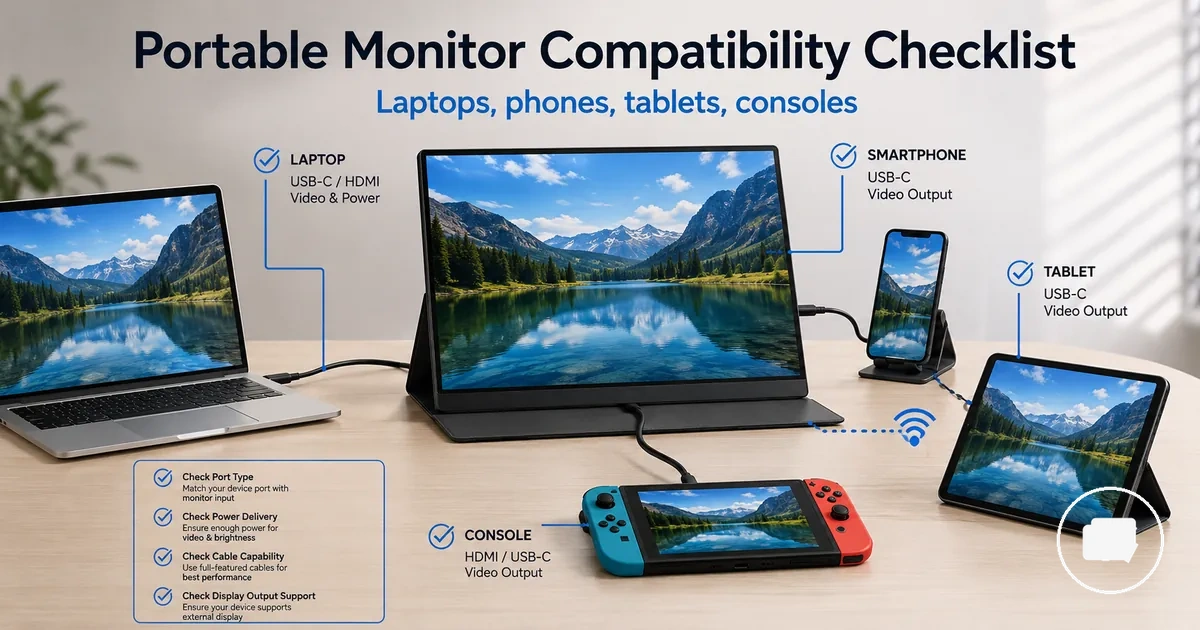
Portable Monitor Compatibility Checklist
Portable monitor compatibility depends on whether the source device supports video output, an appropriate power path, and a compatible connection. Compatibility varies by monitor input, USB-C or HDMI support, power delivery, cable path, adapter direction, device model, and display support.
Portable monitor compatibility means a laptop, phone, tablet, or console can send a compatible video signal to the portable monitor while meeting its power and connection requirements. The connector alone is not enough because the port, cable, adapter, and monitor must support the required signal path. USB-C can support different capabilities depending on the device model, while HDMI carries a video signal but may require a separate power source for the monitor. This compatibility logic provides the basis for the checklist used throughout the page.
Each device type should be checked within its own compatibility context. A laptop may depend on its video output, operating system, and available display support. A phone, tablet, or console may have different support limits based on its hardware, cable capability, adapter direction, and monitor requirements. Setup and troubleshooting become relevant only when they help confirm whether the connection is compatible.
A connector that fits physically does not automatically confirm compatibility. The final display outcome still depends on the complete signal path, including video support, power delivery, cable capability, and device-specific limits.
Portable monitor compatibility requirements
Portable monitor compatibility requirements start with compatible video output, monitor input, power source, and cable support. Each requirement must align before a source device can display an image on a portable monitor. The core requirement categories are signal, power, cable support, and display mode.
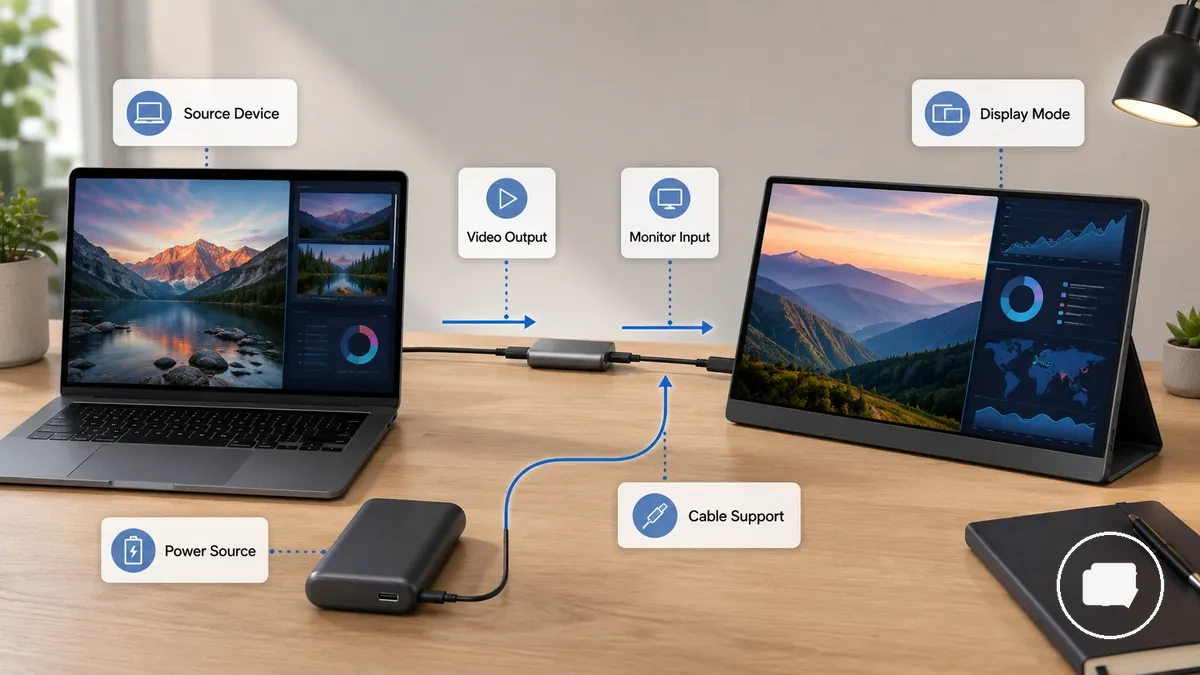
Compatibility requirements describe the conditions a source device must satisfy rather than the accessories it uses. A compatible signal path depends on the relationship between the source device, monitor input, USB-C or HDMI connection, cable support, and any required adapter. Device support may vary by operating system, display mode, and hardware capabilities. For broader context, see the portable monitor guide. A matching connector shape alone does not confirm video or power compatibility.
Common compatibility limits include data-only ports, insufficient power source capability, unsupported display mode, or an adapter used in the wrong direction. Any of these conditions may prevent the expected display outcome even when the connector fits correctly. The portable monitor compatibility requirements checklist below verifies the key conditions for signal, power, cable, and display mode.
- Video output: Verify the source device can provide a compatible video output to the monitor input, or a display may not appear.
- Power source: Confirm the available power source meets the portable monitor's power needs, including separate power where required.
- Cable support: Check that the cable and any adapter support the intended signal path because cable capability can affect compatibility.
- Display mode: Verify the operating system and source device support the intended display mode, such as mirroring or extended display, when available.
- Adapter direction: Ensure the adapter is designed for the required signal direction, as an incorrect direction may prevent a compatible display outcome.
Connection standards that control compatibility
Connection standards determine what a portable monitor connection can carry. A connection may support a video signal, power, or both depending on the supported standard and the capabilities of the connected devices. Compatibility depends on separating video support from power support instead of relying on connector shape alone.
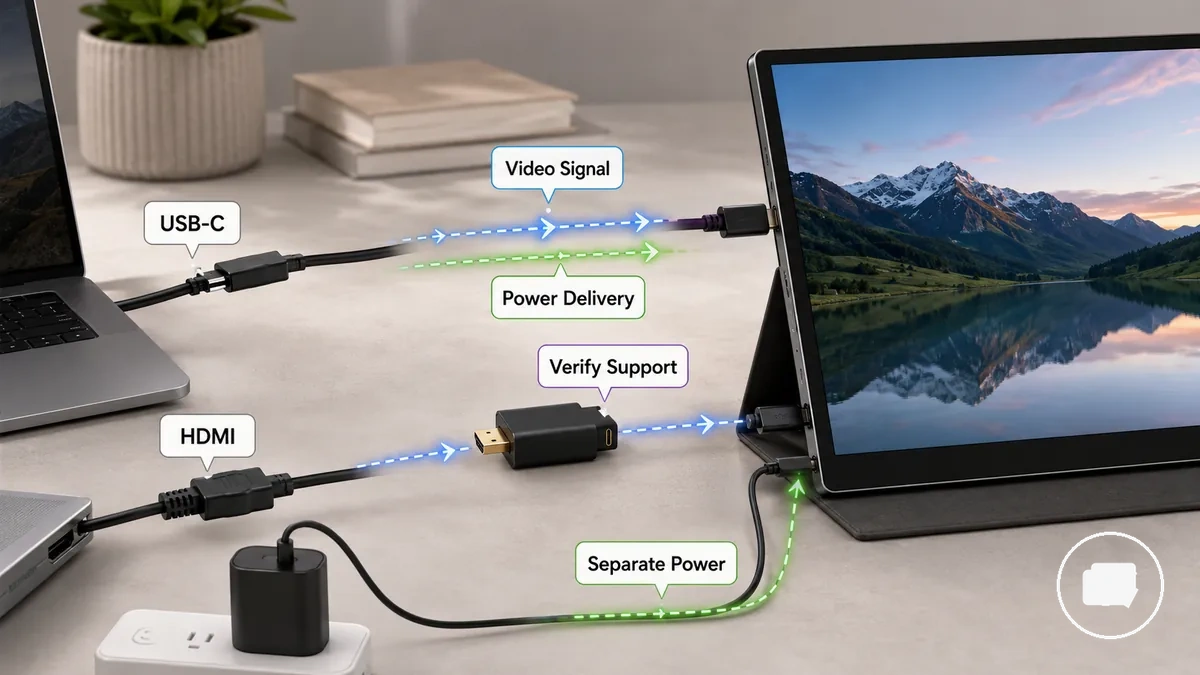
Connection standards describe capabilities rather than physical connector shapes. USB-C can support different functions depending on whether the device provides DisplayPort Alt Mode, Thunderbolt support, power delivery, or another supported capability. HDMI and mini HDMI primarily carry a video signal, while a portable monitor may still require separate power depending on the monitor and source device. An adapter or cable can only pass supported functions when both ends of the signal path support them, so connector shape should not be treated as proof of compatibility.
A USB-C cable does not automatically provide video output, and an HDMI connection does not necessarily power a portable monitor. Device capability, cable support, adapter direction, and monitor requirements all influence the final compatibility outcome. For broader connection criteria, see the portable monitor ports and power guide. The comparison below shows how connection standards that control compatibility can affect portable monitor support.
Connection standards that control compatibility compare what each connection path may carry and what should be verified before expecting a display.
| Standard or path | What it may carry | What to verify | Compatibility risk |
|---|---|---|---|
| USB-C with video support | Video signal and, in many cases, power delivery | DisplayPort Alt Mode or another supported display capability | USB-C connector shape alone does not confirm video support |
| USB-C charge-only or data-only | Charging or data | Port specification and device capability | No compatible video output |
| HDMI or mini HDMI | Video signal | Monitor input and separate power requirements | Separate power may still be required |
| Adapter-based path | Depends on supported signal conversion | Adapter direction, cable capability, and device support | Unsupported conversion may prevent display output |
USB-C video output, DisplayPort Alt Mode, and power delivery
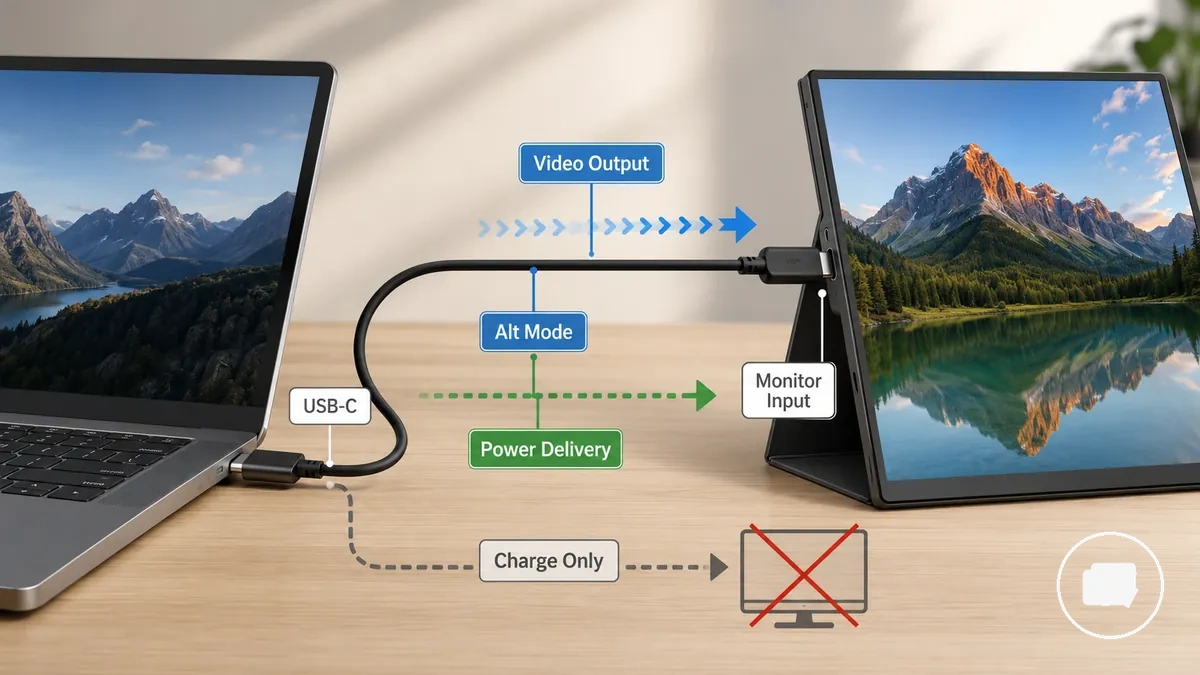
USB-C video output depends on the source device, cable, and portable monitor supporting a compatible display path. A USB-C connection may carry video, charging, or data depending on the supported mode. For portable monitors, video output commonly requires DisplayPort Alt Mode or another supported display capability such as Thunderbolt.
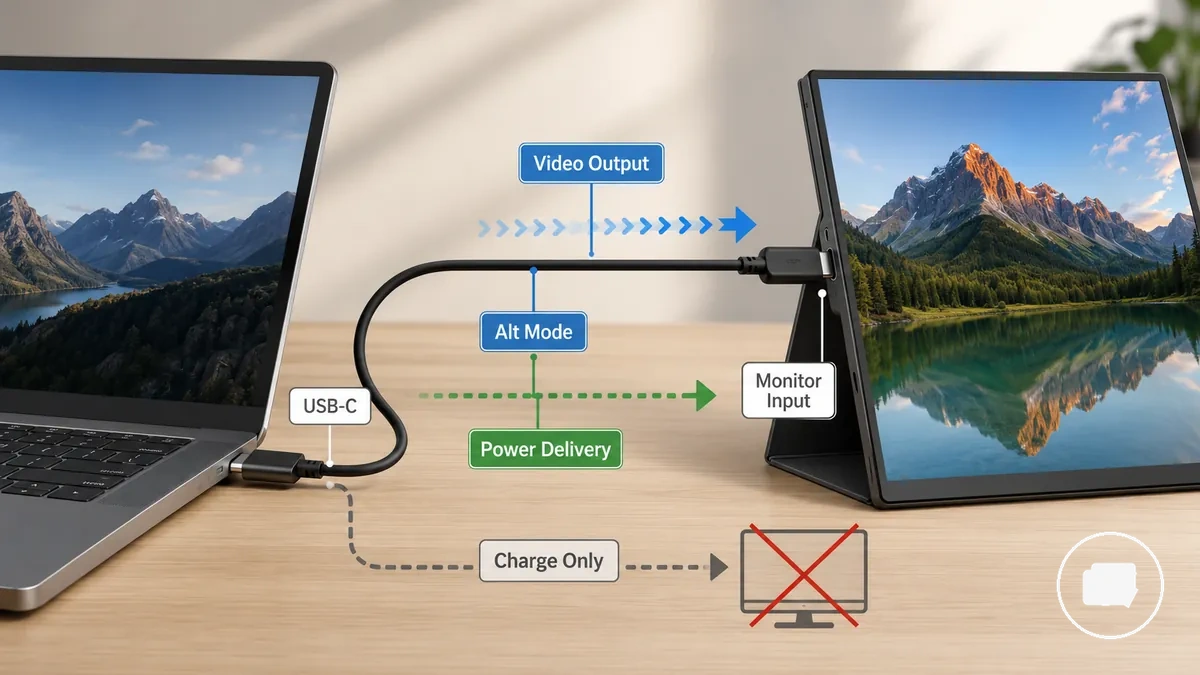
The same USB-C connector can support different functions on different devices. One USB-C port may provide USB-C video output through DisplayPort Alt Mode or Thunderbolt, while another may be limited to charging or data transfer. A charge-only cable or a data-only port can prevent a display signal even though the connection appears correct. Checking the supported USB-C mode, cable rating, and external display support helps identify whether the connection is likely to produce a display or a no-signal outcome.
A simple comparison highlights the difference. A laptop with USB-C video output, DisplayPort Alt Mode, a compatible cable, and power delivery can often connect directly to a portable monitor. A device with a charge-only USB-C path may still charge or transfer data but may not provide a display signal.
Use this USB-C video output, DisplayPort Alt Mode, and power delivery checklist to verify the connection:
- Confirm the source device supports USB-C video output through DisplayPort Alt Mode, Thunderbolt, or another supported external display capability.
- Verify the cable rating supports video transfer and is not limited to a charge-only cable.
- Check that the portable monitor accepts video through its USB-C input.
- Confirm the power delivery path can supply monitor power when required for a stable connection.
- If one of these conditions is missing, the connection may provide charging or data transfer without a display signal.
HDMI signal output and separate power
HDMI signal output usually carries the video signal, while portable monitor power normally comes from a separate source. A compatible display depends on both the HDMI video path and an available power connection. Many portable monitors therefore require a USB power source in addition to the HDMI connection.
HDMI signal output travels from the source device through the HDMI cable to the monitor's HDMI input, while monitor power follows a separate USB power path. Display success may also depend on resolution support and the capabilities of both the source device and the monitor. If an HDMI-to-USB-C connection is required, the adapter direction and adapter type can affect whether the video signal reaches the monitor because not every conversion path supports the same signal flow.
A laptop connected to a portable monitor through HDMI illustrates the separation of signal and power. The HDMI connection can carry the video signal, while the monitor may still require a separate USB power source before an image can be displayed.
Use this HDMI signal output and separate power check to verify the connection:
| Check | What it confirms |
|---|---|
| HDMI video path | The source device can send a video signal through HDMI output. |
| HDMI input | The portable monitor accepts the incoming HDMI video signal. |
| Separate USB power | The monitor receives the power needed to operate. |
| Resolution support | The source device and monitor support a compatible display mode. |
| Adapter direction | An HDMI-to-USB-C adapter, when used, supports the intended signal path. |
Laptop compatibility checks
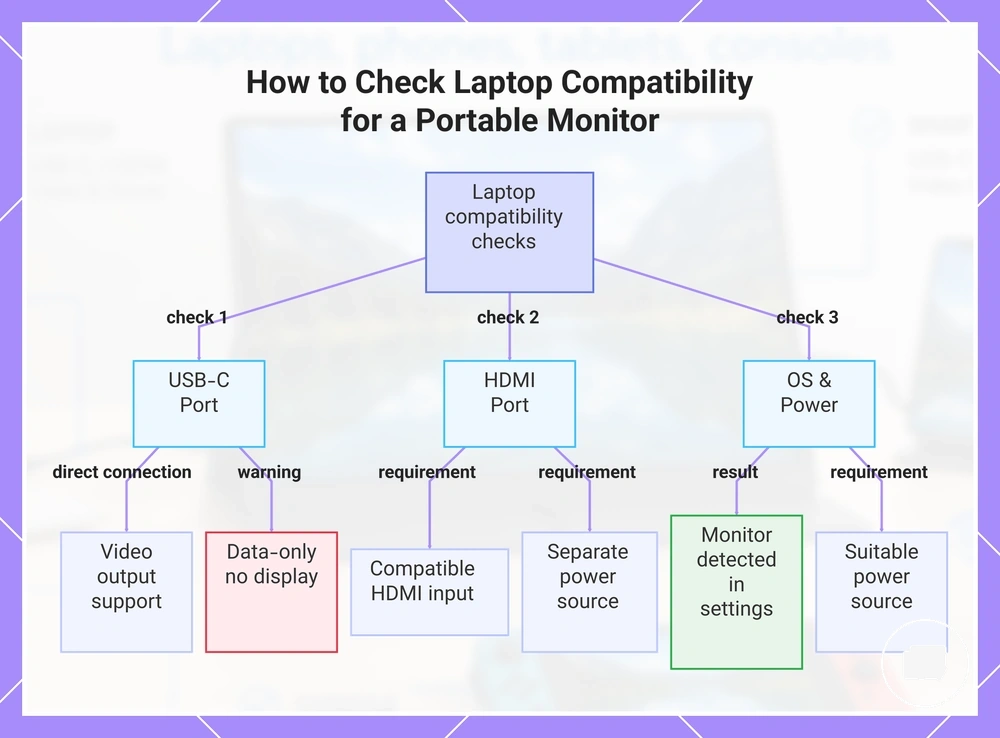
Laptop compatibility depends on video output, external display support, operating system behavior, and a suitable power path. A usable second screen also requires the laptop to detect the portable monitor correctly. Use the checklist below to verify whether a laptop is likely to support a portable monitor before choosing one.
A laptop with a USB-C port that supports video output may connect directly to a portable monitor, while another laptop may rely on HDMI output with a separate power source for the monitor. The required connection path varies by laptop model, port capability, cable, and monitor input. A USB-C port that supports only data transfer may not provide a display signal even though the connector fits.
If the portable monitor is not detected, check the display settings and confirm operating system detection before assuming the hardware is incompatible. External display support, graphics output, and multi-monitor limits can vary between laptop models. When these conditions are met and the monitor receives the required power source, a usable second screen is more likely to be available.
A laptop compatibility check is useful before using a portable monitor in a work setup. After compatibility has been confirmed, the portable monitor for laptop work guide explains practical usage scenarios.
Laptop compatibility checks verify ports, operating system detection, power, and display limits before connecting a portable monitor:
- If the laptop has a USB-C port with video output support, it may connect directly to a compatible portable monitor.
- If the laptop uses HDMI output, confirm the monitor has a compatible HDMI input and receives a suitable power source when required.
- If the operating system detects the monitor in the display settings, extended display or mirror mode may become available.
- If the USB-C port supports only data transfer, that connection may not provide an external display.
- If multi-monitor limits restrict graphics output, the available second-screen options may be reduced.
- If the cable path, monitor input, and power source match the laptop's capabilities, the connection is more likely to provide a usable second screen.
This chart shows the main checks to verify whether a laptop can support a portable monitor, covering port types, OS detection, and power requirements.
External display support and operating system detection
External display support and operating system detection depend on both laptop display capability and software recognition. A portable monitor can be recognized only when compatible graphics output is available and the operating system detects the connected display. Recognition therefore relies on both hardware support and software behavior.
Display settings, driver behavior, monitor input selection, and the cable path all influence whether the operating system recognizes a portable monitor. Compatible graphics output must reach the correct monitor input before the display can appear as an available external screen. Driver behavior and operating system detection can also affect display recognition even when the physical connection is correct. If the monitor is still not detected, the result may indicate a compatibility limit or a setup issue rather than confirming a hardware fault.
Use this external display support and operating system detection checklist to verify the main recognition conditions:
- Confirm the laptop provides external display support through its available graphics output.
- Check the display settings to see whether the operating system recognizes the connected monitor.
- Verify that the monitor input matches the connected cable path.
- Consider whether driver behavior or the current operating system state may affect display recognition.
- If recognition does not occur after these conditions are verified, the result may reflect a compatibility limit or a setup issue.
Single-monitor and multi-monitor output limits
Single-monitor and multi-monitor output limits vary by laptop graphics hardware, available ports, and display mode. One laptop may support one external display, while another may support multiple external displays under specific conditions. The distinction is between one-screen support and multi-screen capacity.
When a laptop uses mirror mode, the same image appears on more than one display, while extend mode may require additional graphics resources and connection capability. A docking path or hub path can also influence the available display output depending on graphics hardware, port bandwidth, resolution, refresh rate, and operating system limits. These conditions vary by laptop model and connection path. Check the laptop specifications and connection path before assuming support for multiple external displays.
Use this single-monitor and multi-monitor output limits comparison to evaluate display capacity:
| Output situation | What to verify | Compatibility implication |
|---|---|---|
| One external display | Graphics hardware, video output, and compatible display mode | May support one external display when the connection path is compatible. |
| Multiple external displays | Graphics hardware, port bandwidth, resolution, and refresh rate | Support depends on the laptop model and available display capabilities. |
| Docking path or hub path | Dock or hub capability together with the available video output | Display capacity depends on the complete connection path rather than the dock or hub alone. |
| Mirror mode versus extend mode | Operating system display mode and graphics capability | Mirror mode duplicates the same image, while extend mode may require additional display support. |
Phone and tablet compatibility checks
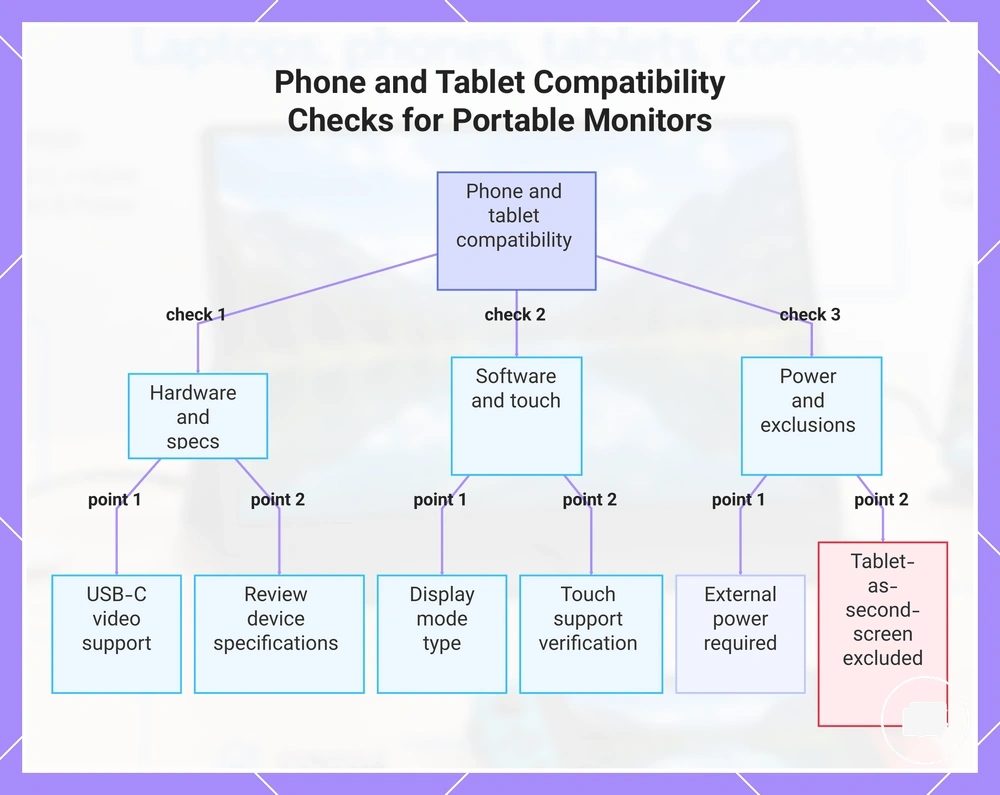
Phone and tablet compatibility depends on video-capable display output and the software display mode supported by the mobile device. A portable monitor can display content only when the phone or tablet supports compatible display output and the required operating mode. The final display outcome depends on both hardware support and software behavior.
Not every USB-C mobile device supports an external monitor. A USB-C connector alone does not confirm USB-C video support because display capability varies by phone or tablet model. Desktop mode, screen mirroring, and other display functions also depend on the mobile device and operating system. Check the specifications for the specific model before expecting portable monitor compatibility.
When desktop mode is available, the portable monitor may provide a different display experience than screen mirroring because the software mode controls how content appears on the external display. Other mobile devices may support only screen mirroring or provide limited display output. Touch support can also vary between the host device and the portable monitor. External power may be required to maintain a stable display connection in some situations.
Tablet-as-second-screen features use a different display approach and fall outside these phone and tablet compatibility checks. They are relevant only when they help explain a compatibility limit rather than determine whether a phone or tablet can output to a portable monitor.
Use these phone and tablet compatibility checks to verify the main display conditions before connecting a portable monitor:
- Confirm the phone or tablet supports USB-C video support or another compatible display output method.
- Check whether the mobile device supports desktop mode, screen mirroring, or only a limited external screen mode.
- Verify whether touch support is available or whether input remains on the host device.
- Confirm that external power is available if the portable monitor or mobile device requires it for stable operation.
- Review the device model specifications because display output support varies between mobile devices.
- If the required hardware support and software mode are available, the portable monitor is more likely to provide a usable display outcome.
This chart shows the main checks to verify whether a phone or tablet can work with a portable monitor, covering hardware, software, and other conditions.
USB-C video support and desktop display modes
USB-C video support must be available before desktop display modes affect portable monitor compatibility. A mobile device requires video-capable USB-C to send display output to a portable monitor. The connector shape alone does not confirm that video output is supported.
When USB-C video support is available, the OS display mode determines how content appears on the external display. Desktop display mode may provide a desktop-style interface, while screen mirroring may duplicate the mobile device screen. App behavior, orientation, and resolution can influence the display outcome even when video output is supported. The final result depends on the mobile device model and supported operating system features.
Use these USB-C video support and desktop display mode checks to evaluate likely compatibility outcomes:
- Supported: If the mobile device provides video-capable USB-C and a compatible desktop display mode, the portable monitor may show a desktop-style interface or another external screen mode.
- Limited: If USB-C video support is available but only screen mirroring is supported, the external display may duplicate the mobile device screen, with app behavior, orientation, or resolution affecting the experience.
- Unsupported: If the mobile device does not support USB-C video output, changing the OS display mode does not enable portable monitor output.
Touch input and power limitations
Video output can work even when touch input or charging is limited. A phone or tablet may display content on a portable monitor without providing touchscreen support or sufficient charging through the same connection. Display output, touch input, and charging behavior are separate functions.
Touch input and power limitations depend on both the mobile device and the portable monitor. Touchscreen support requires compatible host device input support as well as monitor touch support, while USB power draw can increase battery drain during extended display use. When power demand exceeds the available mobile power source, external power may help maintain a more stable connection. For example, a portable monitor may display video correctly even when touch input or charging remains unavailable because those functions depend on separate support conditions.
Use these touch input and power limitations checks to evaluate compatibility:
- If video output works but touchscreen support is unavailable, the portable monitor may display content while touch input remains on the host device.
- If USB power draw increases battery drain, an external power source may help provide a more stable display session.
- If both the phone or tablet and the portable monitor support touch input, touchscreen features may be available depending on host device input support.
- If charging behavior is limited during display use, the mobile device may require external power even though video output continues to function.
Console compatibility checks
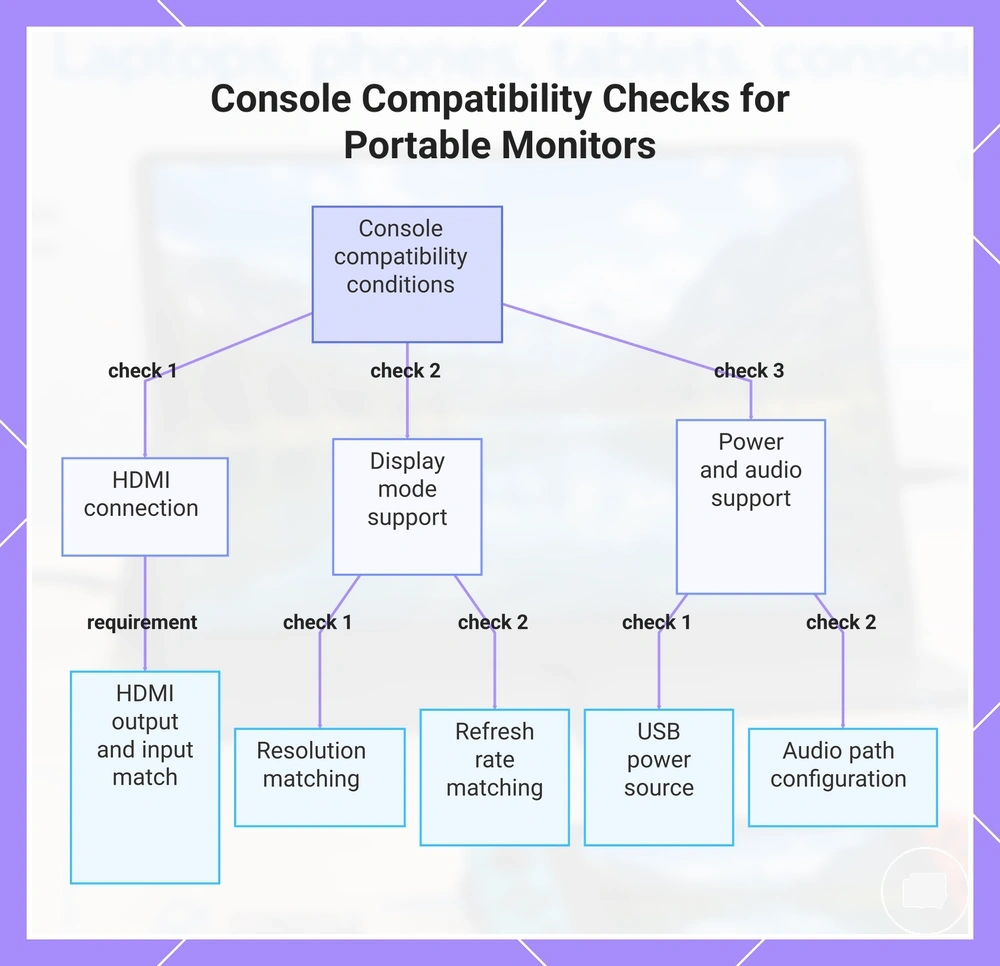
Most console compatibility checks start with HDMI output, display mode support, and a suitable power source. A portable monitor must accept the console's HDMI input requirements and receive a compatible HDMI signal before a gaming display can function. Use the checklist below to verify the main compatibility conditions.
A typical setup connects the game console's HDMI output to the portable monitor's HDMI input. The display depends on both devices supporting a compatible display mode rather than the cable connection alone. Resolution support and refresh rate should also be compatible because available display modes vary between consoles and portable monitors. Check both console settings and monitor capabilities before expecting a specific display outcome.
Separate power is another compatibility requirement. Many portable monitors rely on a USB power source while receiving video through HDMI, so both the display signal and power path must remain available. The audio path may also depend on the monitor and console configuration, with sound routed through the monitor or another supported output option. Stable operation depends on maintaining both signal and power throughout use.
Gaming performance attributes belong here only when they affect compatibility, such as supported display modes or available output paths. Broader gaming features and selection criteria are covered in the portable monitor for gaming guide.
Use these console compatibility checks before connecting a portable monitor:
- Verify the console provides HDMI output and the portable monitor has a compatible HDMI input.
- Confirm the selected display mode matches the monitor's supported resolution support and refresh rate.
- Check that the portable monitor receives power from a suitable USB power source when required.
- Verify the audio path matches the monitor and console output options if audio is expected through the display.
- If HDMI output, HDMI input, display mode, and power source are all compatible, the console is more likely to provide a usable gaming display.
This chart outlines the main compatibility conditions to verify before connecting a game console to a portable monitor.
HDMI input, resolution, and refresh-rate support
HDMI input, resolution, and refresh-rate support depend on more than the presence of an HDMI connection. A console display works only when the console output mode matches the portable monitor's supported display modes. Compatibility therefore depends on supported mode matching rather than HDMI presence alone.
A console sends its selected output mode through the HDMI output to the portable monitor's HDMI input. The monitor must support the chosen resolution support and refresh-rate support before a compatible display mode can be used. HDR limits, scaling behavior, and monitor capability may also influence the display result depending on the selected console output mode. Basic signal compatibility should be confirmed before considering performance-oriented gaming suitability, and exact display modes should be verified for the specific console and portable monitor models.
Use this HDMI input, resolution, and refresh-rate support comparison to verify compatibility:
| Console display factor | What to verify | Compatibility effect |
|---|---|---|
| HDMI input | Monitor accepts the selected console output mode. | Allows the display signal to be received when supported. |
| Resolution support | Supported resolution matches monitor capability. | Improves compatibility with the selected display mode. |
| Refresh-rate support | Supported refresh rate matches the monitor capability. | Display behavior depends on compatible mode matching. |
| HDR limits or scaling behavior | Monitor capability supports the selected display mode. | Image presentation may vary by model and display settings. |
| Audio path | Monitor supports the intended HDMI audio output. | Sound output depends on compatible monitor and console settings. |
USB power sources for portable console setups
USB power sources for portable console setups are usually required because HDMI video normally carries the display signal without supplying separate power to the portable monitor. The monitor typically needs its own USB power source while the console provides the video signal. The most suitable power source depends on the monitor's power requirements and the available power option.
If the selected USB power source cannot provide stable power, the portable monitor may not operate reliably even when HDMI video is working. A wall adapter, console USB port, or power bank may be suitable, but power availability can vary by device. Monitor wattage requirements and cable quality can also influence display stability during use. For safe operation, match the USB power source to the monitor's requirements rather than assuming every charger or power bank is appropriate.
Use these USB power sources for portable console setups to check power conditions:
- A wall adapter may provide stable separate power when it matches the monitor wattage requirement.
- A console USB port may power the portable monitor if sufficient USB power is available, but capability depends on the console.
- A power bank may support portable use when it can meet the monitor's power requirements.
- Cable quality can affect power stability, so use a cable suitable for the required USB power connection.
Adapter and cable compatibility checks
Adapter and cable compatibility works only when the connection preserves the required video path and power path. A matching connector does not guarantee a working display if the supported protocol, adapter direction, or signal type differs. Verify both the connection direction and supported protocol before using an adapter or cable.
Matching connector shapes can suggest compatibility, but they do not confirm signal conversion. An adapter may connect two ports while still failing to carry the required video path if the signal type is unsupported. Adapter compatibility depends on preserving the intended connection rather than changing it automatically. Checking adapter direction first helps reduce the risk of an incompatible conversion path.
Supported protocol, bandwidth, charging capacity, and monitor input should be checked together before connecting a portable monitor. Cable compatibility depends on whether the cable supports the required video path as well as the necessary power path when applicable. If these conditions match the connected devices, a direct cable may provide fewer potential failure points than an adapter chain. Choose a direct cable when it satisfies the required connection without additional conversion.
An adapter chain can introduce additional compatibility checks because each connection must preserve the required signal and power path. If one adapter changes the signal type or limits the connection path, the portable monitor may not receive the expected display signal. Use these adapter and cable compatibility checks before selecting the simplest compatible connection:
| Cable or adapter part | Attribute to verify | Supported condition | Effect or decision |
|---|---|---|---|
| Full-featured USB-C cable | Supported protocol | Matches the required video path and power path | May support a direct cable connection |
| HDMI cable | Bandwidth | Matches the selected display mode | Supports compatible signal transmission when requirements align |
| USB-C to HDMI adapter | Adapter direction and signal type | Matches the intended conversion path | May work only when the conversion is supported |
| Power cable | Charging capacity | Meets the monitor power requirement | Can help maintain stable operation |
| Hub or adapter chain | Connection path | Preserves video and power without unsupported conversion | Use only when a direct cable is not suitable |
These checks help identify whether the required video path and power path remain intact across the complete connection. After confirming adapter compatibility, the next step is to set up a portable monitor using the verified connection path.
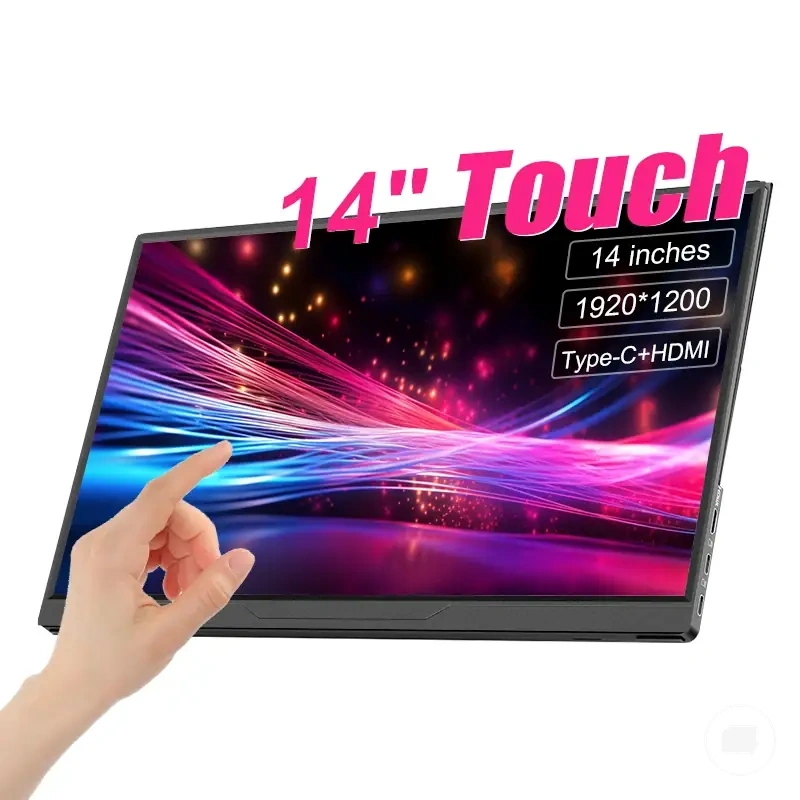
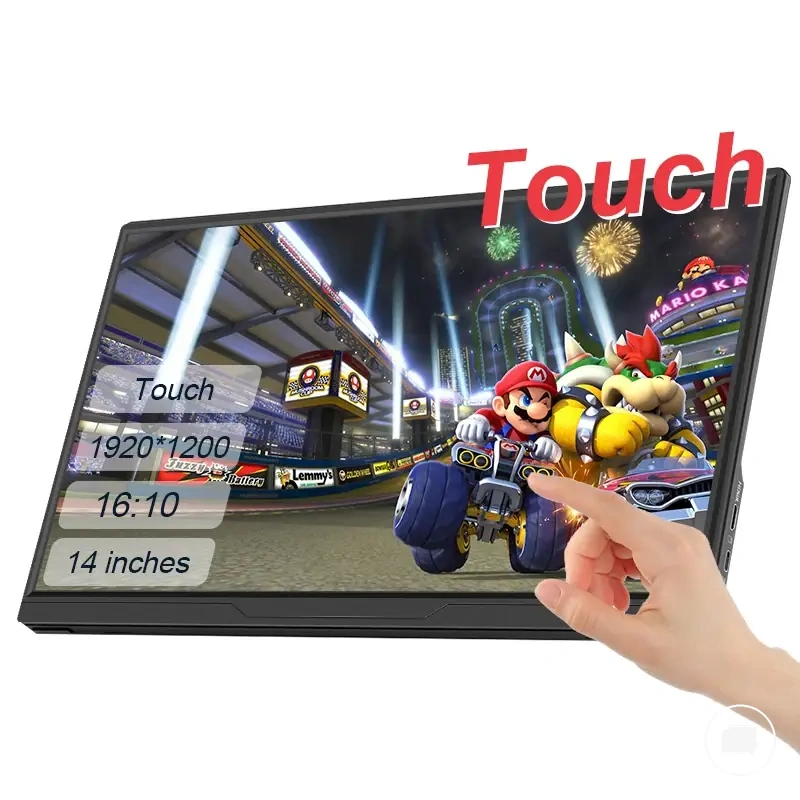
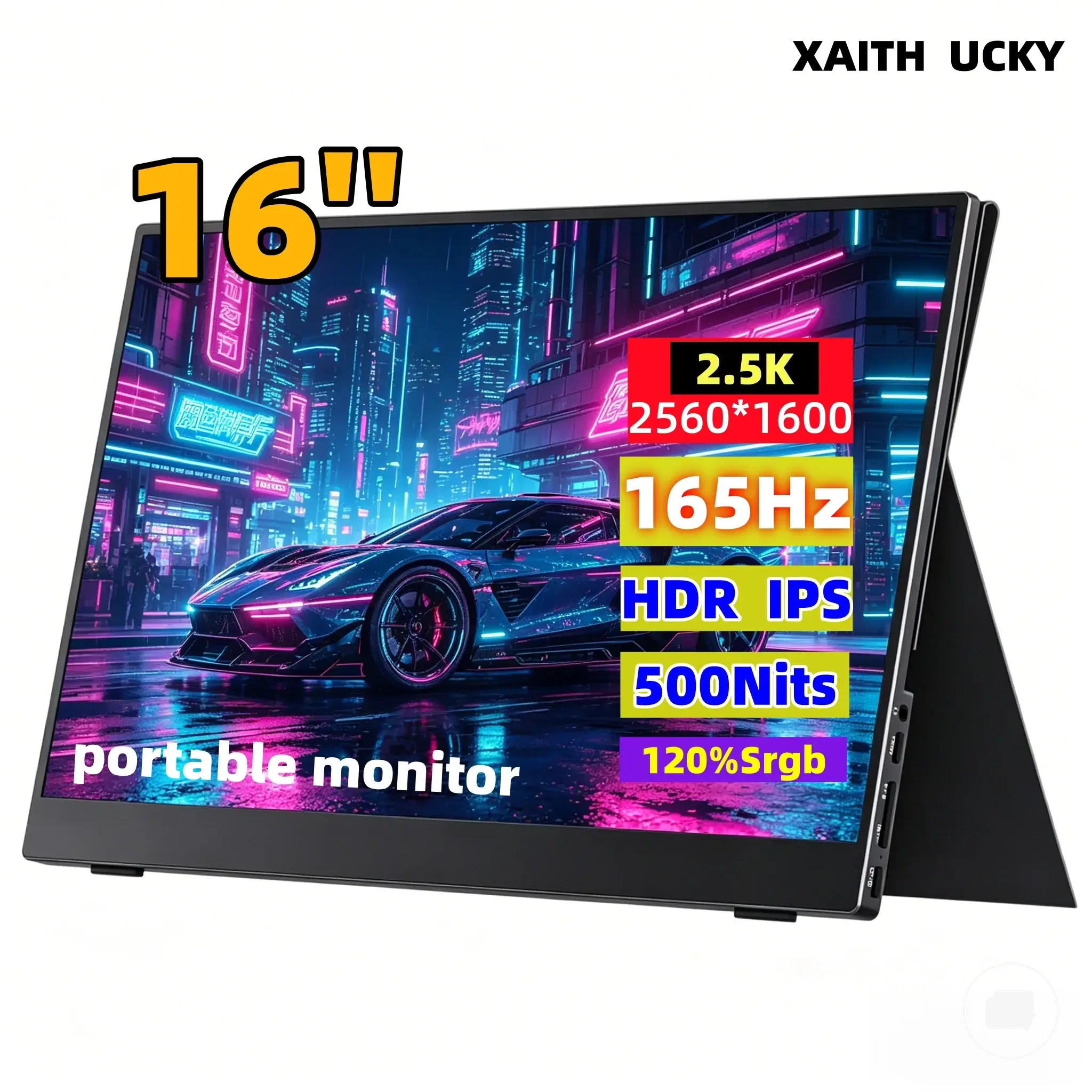
Here are product examples that may make comparison easier. Before buying, always review the compatibility criteria, essential features, and product details.
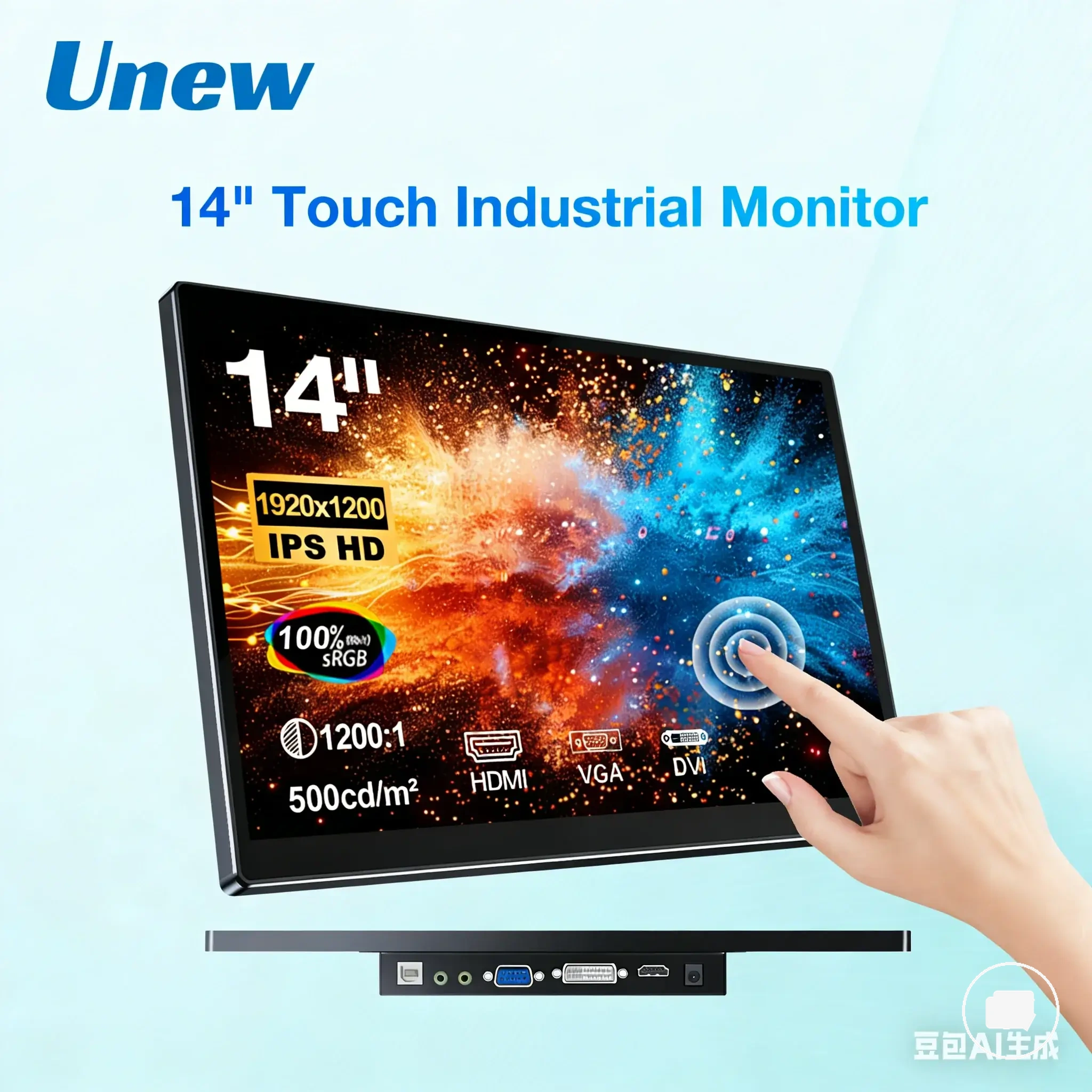
Full-featured USB-C cables and USB-C to HDMI adapters
Full-featured USB-C cables and USB-C to HDMI adapters work only when they carry the required video signal in the correct direction. Compatibility depends on cable capability, adapter direction, and the supported protocol rather than the connector shape alone. Verify that a full-featured USB-C cable supports the required display function before connecting a portable monitor.
A USB-C connector or cable branding does not confirm DisplayPort Alt Mode, bandwidth, power delivery, or display capability by itself. A full-featured USB-C cable may support video output only when the connected device also supports the required protocol. A USB-C to HDMI adapter must also match the correct HDMI conversion direction because signal conversion is not automatically bidirectional. A cable that fits physically is different from an adapter that performs active signal conversion.
Use these full-featured USB-C cables and USB-C to HDMI adapters checks to verify compatibility:
- Confirm the full-featured USB-C cable supports DisplayPort Alt Mode when the portable monitor requires USB-C video.
- Check that the USB-C to HDMI adapter uses the correct HDMI conversion direction for the connected source device and monitor.
- Verify that cable capability provides sufficient bandwidth for the intended display mode when supported by the connected devices.
- Confirm that power delivery, when required, supports the intended power path without assuming every cable provides the same charging capacity.
Adapter paths that do not carry video or power
Adapter paths can fail when they connect physically without carrying the required video signal or power. A connector that fits does not confirm video support, direction support, or power delivery. These failure patterns identify connection paths that may not support portable monitor compatibility.
No-signal behavior does not necessarily indicate a broken monitor. Missing video support, an unsupported adapter chain, or the wrong HDMI conversion direction may prevent a display even when the connectors fit correctly. A power-limited path may also affect monitor operation without indicating a hardware fault. After the correct compatibility path has been verified, setup checks can help identify any remaining connection issues.
Use these adapter paths that do not carry video or power warnings to recognize common compatibility risks:
- USB-A data path: A USB-A data path may provide data or power but may not provide the video support required for a portable monitor.
- Charge-only cable: A charge-only cable may deliver power without carrying the display signal needed for video output.
- Wrong-direction HDMI adapter: A wrong-direction HDMI adapter may create a failed connection path because the signal direction does not match the required conversion.
- Low-power USB port: A low-power USB port may not provide sufficient power delivery for stable portable monitor operation.
- Unsupported hub: An unsupported hub may interrupt the required video path or power path, increasing compatibility risk for the connected monitor.
Compatibility warning signs before buying
Compatibility warning signs before buying are missing or unclear compatibility evidence. When important specifications cannot be verified, purchase confidence should remain cautious until the intended connection path is confirmed. These warning signs support a more informed buying decision.
Vague USB-C claims, missing video-output specifications, and unclear monitor input details can increase buying risk. A USB-C connector alone does not confirm display capability, and missing specifications may leave the required video path uncertain. Verify the available compatibility evidence before relying on a product description.
Laptop and mobile-device compatibility can differ even when both devices use USB-C. A laptop may support external video through one USB-C port, while a phone or tablet may depend on different display capabilities or device-specific limits. Confirm compatibility for the exact device model because support varies by hardware and software.
Console compatibility may depend on HDMI support, display mode, and unclear power requirements rather than the monitor connection alone. Resolution mismatch or unsupported display modes can reduce purchase confidence. Verify both the console output and the monitor requirements before making a decision because compatibility depends on the intended setup.
Unsupported adapters should not be treated as a solution for every compatibility mismatch. Direction mismatch, signal support, and the intended connection path still require verification. A direct connection path usually provides a clearer compatibility assessment than an unsupported adapter chain.
Compatibility warning signs should guide the final decision instead of product rankings. Buy only when key compatibility evidence is clear, and reconsider when important specifications are missing or contradictory.
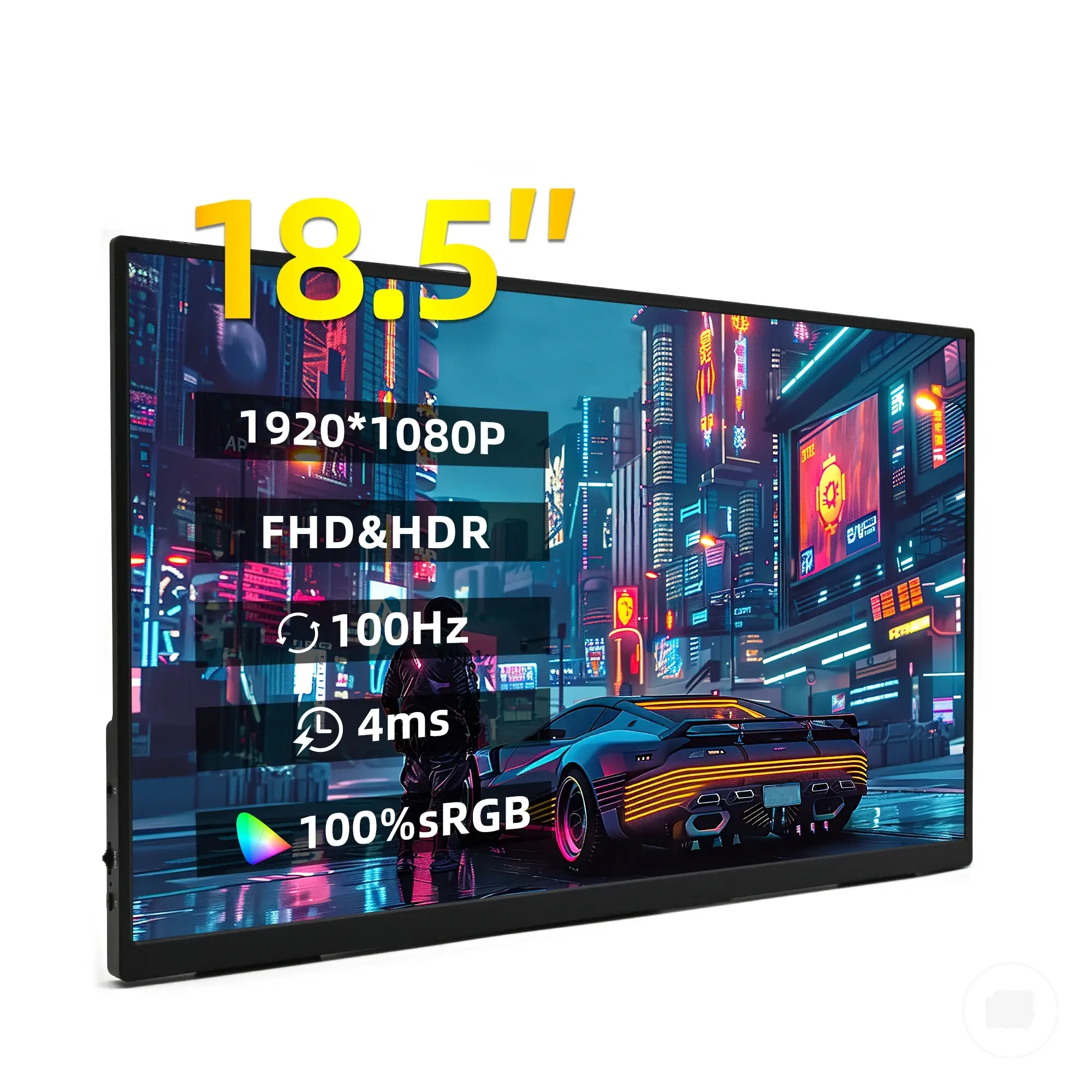
Here are product examples that may make comparison easier. Before buying, always review the compatibility criteria, essential features, and product details.
Use these compatibility warning signs before buying as a final decision checklist:
- Reconsider when video-output specifications are missing or unclear.
- Verify vague USB-C claims before assuming video support.
- Confirm that any required adapters match the intended connection path and direction.
- Check whether power requirements are clearly stated for the intended setup.
- Compare the intended resolution and refresh rate with the supported display mode to reduce resolution mismatch.
- Confirm device-specific limits for laptops, phones, tablets, or consoles before making a purchase decision.
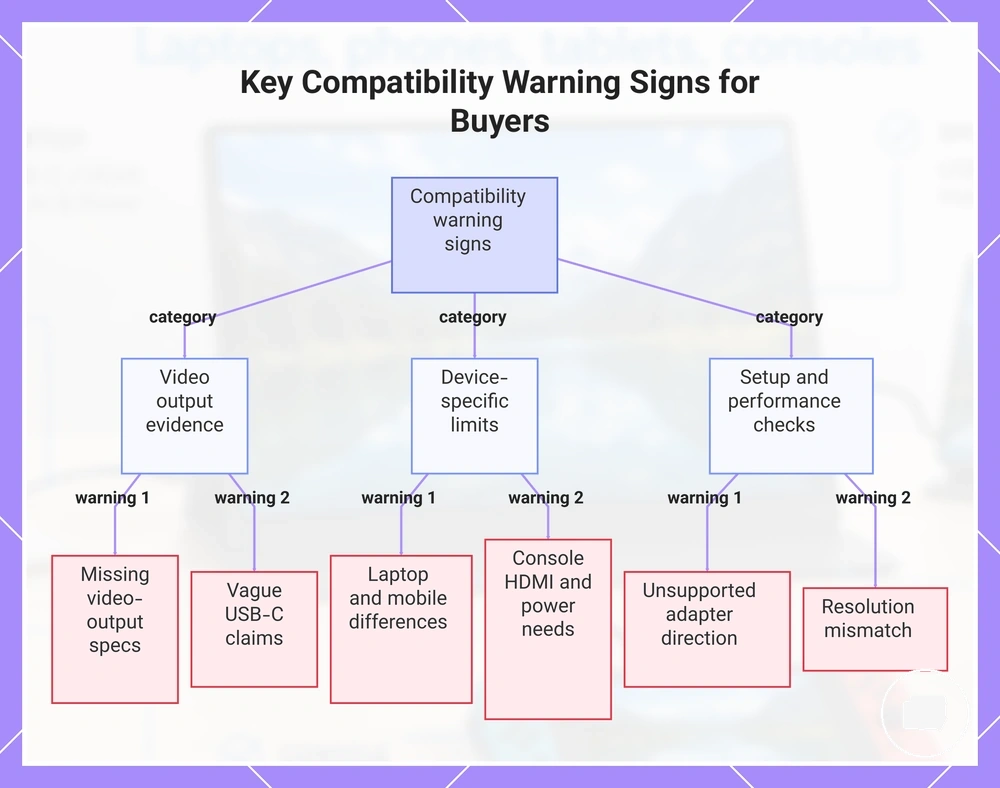
This chart categorizes the main warning signs to check for compatibility before purchasing a device or accessory, including missing video specs, device-specific differences, and setup risks.
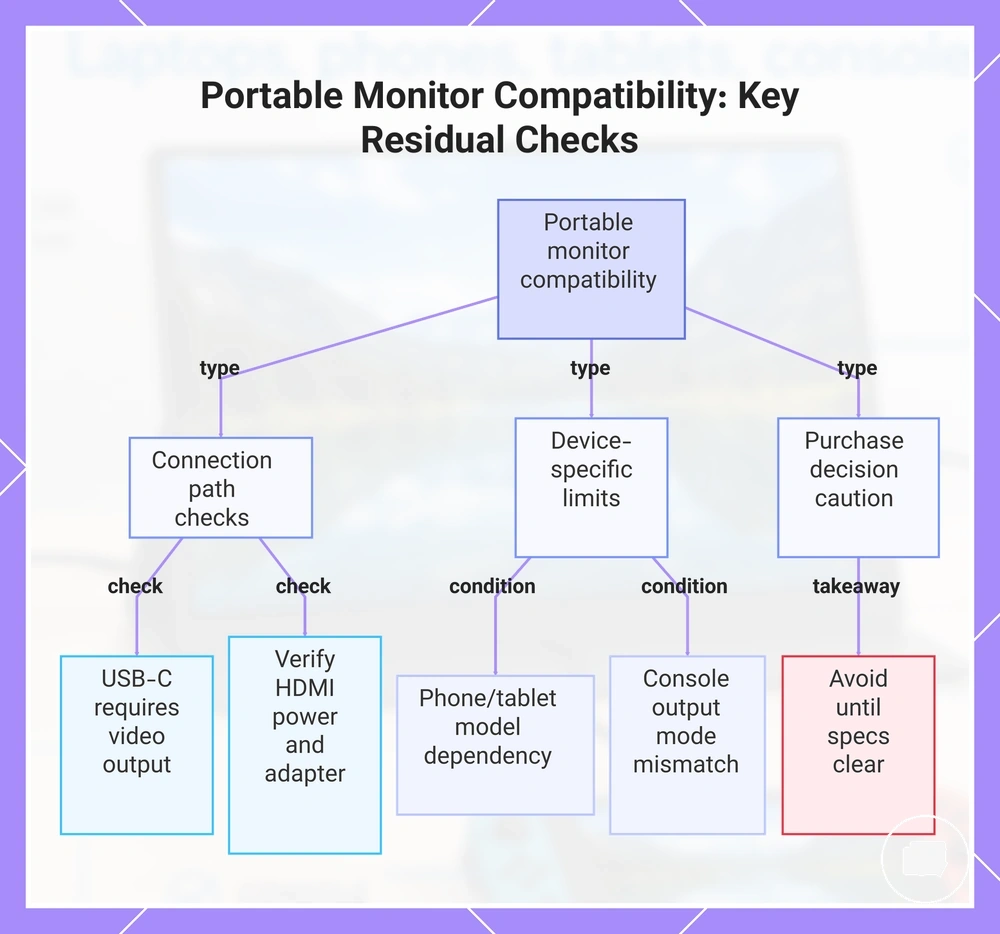
Portable monitor compatibility questions
Compatibility questions often involve residual edge cases that remain after completing the main compatibility checklist. The answers below address common device support and connection support doubts without repeating earlier guidance. Each answer provides a direct response followed by a brief verification cue where appropriate.
Can USB-C without video support work with a portable monitor?
No, not when the USB-C port does not support video output. A USB-C connector may provide power or data without carrying a display signal. Verify that the device supports video output before expecting the portable monitor to display an image.
Does HDMI require separate power for a portable monitor?
Often yes, when the portable monitor does not receive enough monitor power through the video connection. HDMI usually carries the display signal, while HDMI separate power may still be required depending on the monitor design. Check the monitor power requirements before connecting it.
Is adapter direction important for compatibility?
Yes, when the adapter converts one signal type to another. Incorrect adapter direction may prevent signal conversion even if the connectors fit correctly. Verify that the adapter matches the intended source device and display connection.
What can limit a phone external display or tablet external display?
Device support depends on the specific model and its supported display mode. A phone external display or tablet external display may require compatible video output together with supported operating system features. Verify the supported external display capability for the exact device model.
Can a console display mode affect portable monitor compatibility?
Yes, when the selected console display mode is not supported by the portable monitor. Resolution, refresh rate, and available display modes may influence compatibility. Compare the console output settings with the monitor's supported display modes if compatibility remains uncertain.
Should you buy a portable monitor when specifications are unclear?
Usually not until the compatibility evidence is clear. Missing video-output specifications, vague USB-C claims, or unclear connection support can reduce purchase confidence. Verify the required compatibility details before making a buying decision.
This chart summarizes the most common residual compatibility doubts for portable monitors, including connection checks, device-specific limits, and purchase caution.