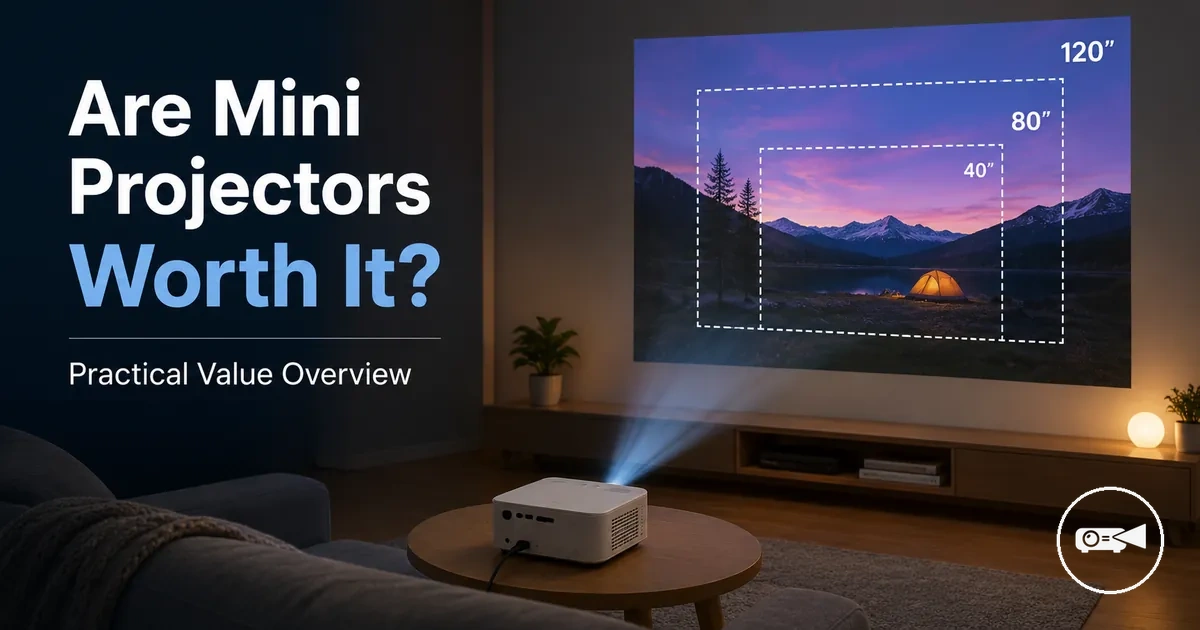
Are Mini Projectors Worth It?
A mini projector is worth it when portability and flexible viewing matter more than daily primary-screen performance. Its value is strongest for a use case such as occasional films, travel, a bedroom, or a temporary setup, provided the budget and expectations allow for lower brightness, simpler audio, and a smaller practical screen size than a television or standard projector.
A mini projector is worth it when portability and flexible viewing matter more than daily primary-screen performance.
The main cost-value decision rests on brightness, resolution, battery capacity, speaker quality, connectivity, and room light. A mini projector offers better value in a dim room, where its available brightness can produce clearer image quality, while higher native resolution improves detail and text clarity at the intended screen size. Portability becomes more useful when the battery supports the planned viewing period, the speaker is adequate for casual use, and wired or wireless connectivity matches the source device.
The main cost-value decision rests on brightness, resolution, battery capacity, speaker quality, connectivity, and room light.
The trade-off is that a compact projector designed for mobility may provide less brightness, weaker sound, or a shorter lifespan than a larger display built for frequent use. For example, a mini projector can be a practical fit for occasional bedroom viewing in low room light, but it offers less long-term value when used every day as the main screen and requires frequent battery charging, speaker upgrades, maintenance, or early replacement. Compare those ownership cost factors with a television or standard projector before judging whether a specific model suits the intended use case.
Table of Contents
What Mini Projector Value Really Depends On
Mini projector value depends on whether its performance limits match the intended use. A model suited to occasional films, travel, or temporary viewing can offer practical value, while the same model may disappoint when expectations include daily primary-screen use. Practical fit is the main value condition.
Mini projector value depends on whether its performance limits match the intended use.
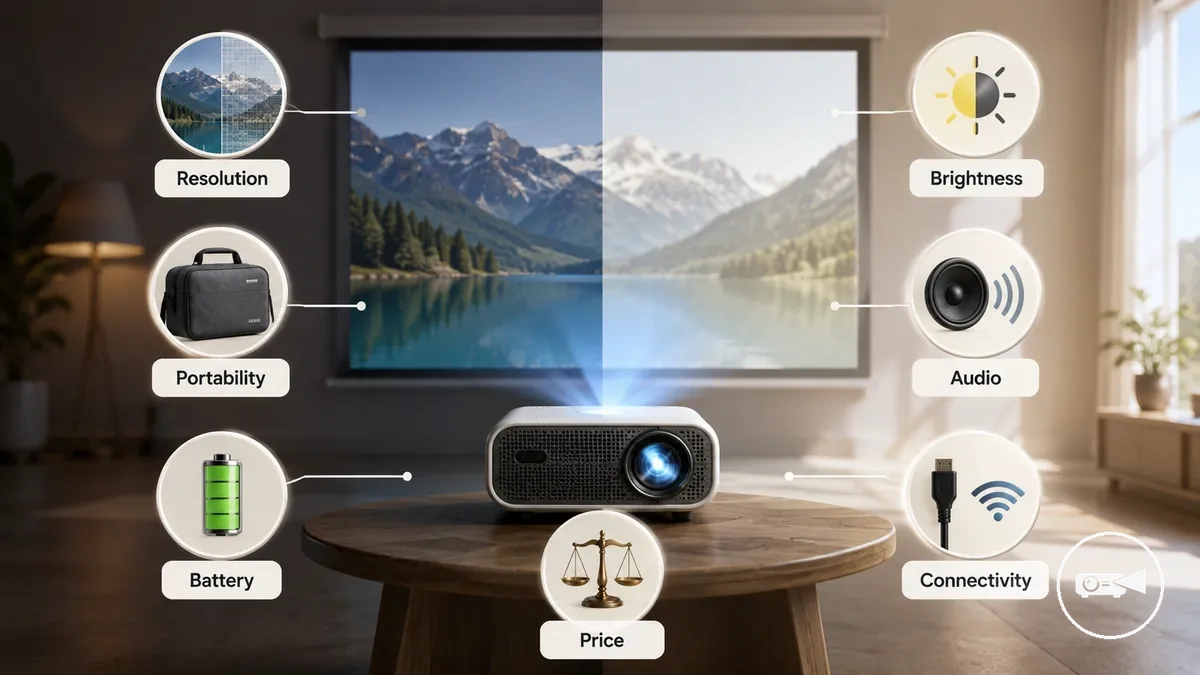
Brightness has more value in room light when the model produces enough visible image contrast for the intended screen size, while native resolution determines whether image detail and text appear sufficiently sharp. Portability supports travel and flexible placement; a battery adds off-mains convenience, audio determines whether an external speaker is needed, and connectivity must match the intended streaming device or adapter. Price represents better value for money when these capabilities meet the use case without paying for unused features or accepting a critical compromise. What Mini Projector Value Really Depends On is shown in the diagram and organised by decision impact in the table below.
| Value factor | What to check | Why it affects worth |
|---|---|---|
| Brightness | Whether the stated output suits the intended room-light condition and screen size | Insufficient brightness reduces visible contrast and increases disappointment risk in brighter rooms. |
| Resolution | The native resolution used to create the projected image | Higher native resolution provides more image detail than a lower native resolution at the same screen size. |
| Portability | Whether the size and weight suit regular transport or flexible placement | A compact, easy-to-carry design adds practical value when the projector must move between locations. |
| Battery | Whether battery operation is available and whether its stated runtime covers the intended viewing session | A suitable battery reduces reliance on mains power, while insufficient runtime requires charging or external power during use. |
| Audio | Whether the built-in speaker is adequate for the room or an external audio connection is available | Adequate built-in audio supports simple viewing, while limited output adds the cost and inconvenience of another speaker. |
| Connectivity | Whether the required wired port, wireless option, streaming support, or adapter is available | Matching connectivity allows the intended source device to work without an avoidable adapter or usability compromise. |
| Price | Whether the included capabilities match the intended use and expectations | Price delivers stronger value when the required performance is included without unnecessary features or a critical limitation. |
For example, portability and battery power add value for occasional travel only when the stated runtime covers the planned session and connectivity supports the source device. This overview frames value assessment rather than serving as a full buying checklist; broader buying criteria are covered in the mini projector guide.
Benefits That Make Mini Projectors Worth Considering
Mini projectors are worth considering when portability and flexible setup matter more than creating a permanent home-theatre installation. They provide the greatest value for renters, small rooms, occasional movie nights, and portable viewing where convenience outweighs maximum performance. This balance between convenience and realistic expectations is the main benefit pattern.
This balance between convenience and realistic expectations is the main benefit pattern.
Portability makes it easy to move a mini projector between rooms, pack it for travel, or store it after use without requiring dedicated furniture. Flexible placement allows temporary viewing in a bedroom, dorm, rental property, or outdoor setting when a fixed television or standard projector is impractical. For example, a renter can project a movie onto a suitable wall for shared viewing and pack the projector away afterwards to keep the room uncluttered. According to ViewSonic's projector guidance, compact projectors provide the most practical value when portability and flexible use are the primary priorities.
Benefits That Make Mini Projectors Worth Considering become clearer when practical advantages are separated from unrealistic expectations.
Benefits That Make Mini Projectors Worth Considering become clearer when practical advantages are separated from unrealistic expectations. The illustration below highlights the scenarios where these benefits help reduce purchase hesitation without suggesting that mini projectors replace larger displays in every environment.
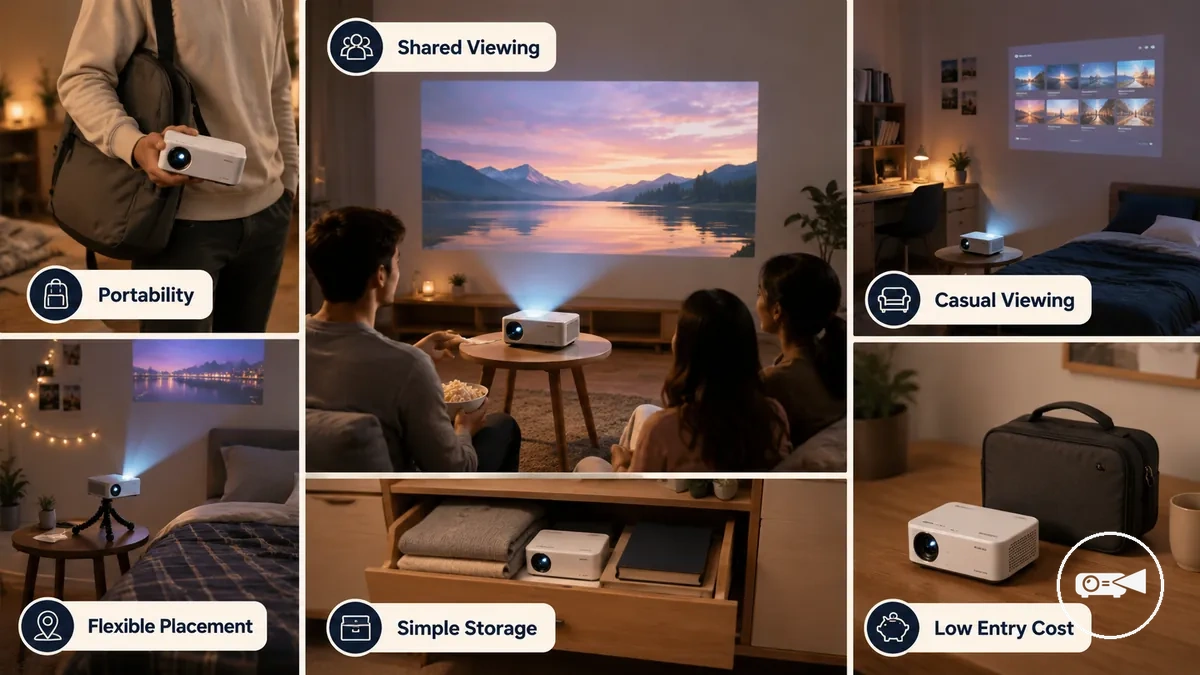
- Portability: Adds value when the projector is regularly moved between rooms, trips, or temporary locations.
- Flexible placement: Works well in a small room or rental property where permanent installation is not practical.
- Casual viewing: Supports movie nights and shared viewing when moderate image brightness matches the room conditions.
- Simple storage: A compact projector is easier to store after use, making it suitable for limited living space.
- Low entry cost: Can provide an affordable path to large-screen entertainment when buyers accept the performance compromises associated with compact designs.
These benefits apply to specific use conditions rather than every viewing situation. Users who prioritise maximum brightness, powerful built-in audio, or permanent daily viewing will usually gain more value from larger projector systems or televisions, while portable viewing and occasional entertainment remain the strongest use cases for mini projectors.
Portability and flexible placement
Portability adds value when a mini projector is used in changing locations instead of a permanent viewing area. A compact size and lower weight make it easier to carry, store, and reposition between rooms or temporary setups. This flexibility is valuable only when the placement conditions suit the viewing space.
This flexibility is valuable only when the placement conditions suit the viewing space.
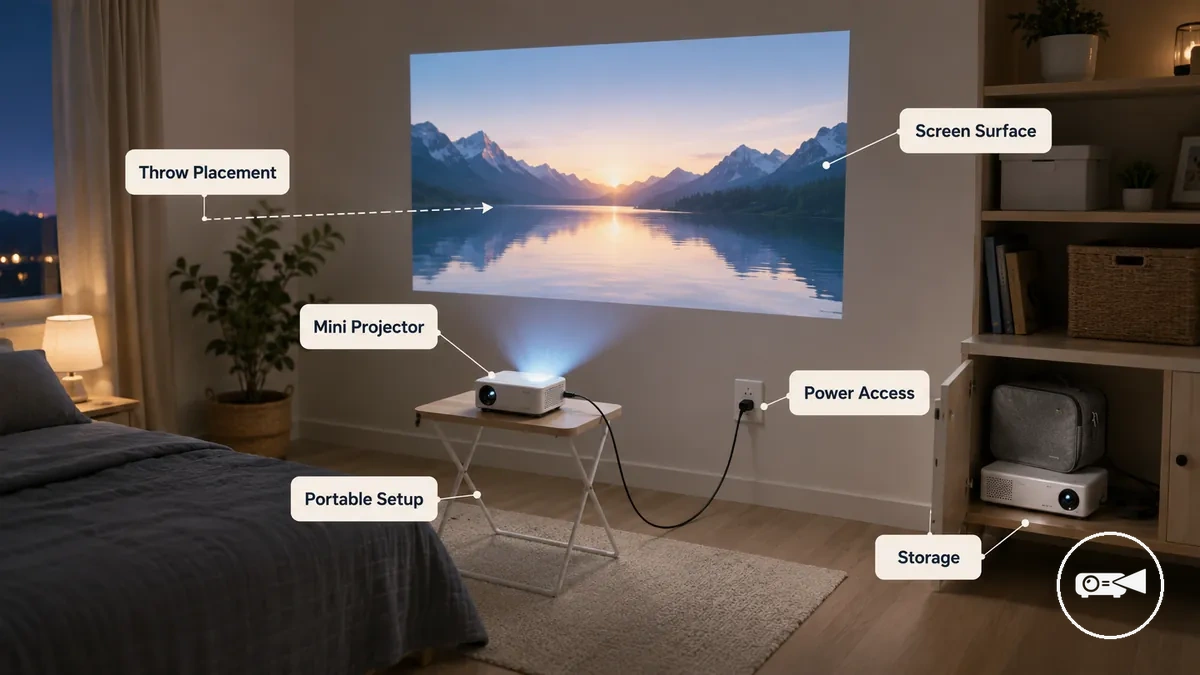
Portability and flexible placement become more practical when the room layout supports the projector's throw placement, screen surface, power access, and storage needs. The image below illustrates a small projector on a portable surface with a nearby wall or screen, realistic room scale, and accessible power, showing how placement convenience can reduce setup friction. For example, placing a mini projector on a side table in a bedroom for an occasional movie night is often more practical than installing a fixed ceiling-mounted system when daily viewing is not required.
A quick check of these conditions helps determine whether portability creates real value:
- Confirm the available room distance suits the required throw placement.
- Use a reasonably flat, light-coloured screen surface or wall for better image clarity.
- Check that power access is available through a nearby outlet or a supported battery-powered projector.
- Ensure the projector's size and weight match the available storage space between uses.
- Consider viewing frequency, as fixed daily viewing usually benefits less from portable placement than occasional use.
Casual movies, travel, and small-room use
Casual use creates the most value when a mini projector is used for occasional entertainment instead of replacing a primary screen. A movie night, a sleepover, or temporary entertainment in a small room can suit this type of projector when brightness, speaker quality, screen surface, and connection needs match the setting. This keeps casual use as the appropriate value frame rather than everyday primary viewing.
Learn more about choosing a mini projector for movies .
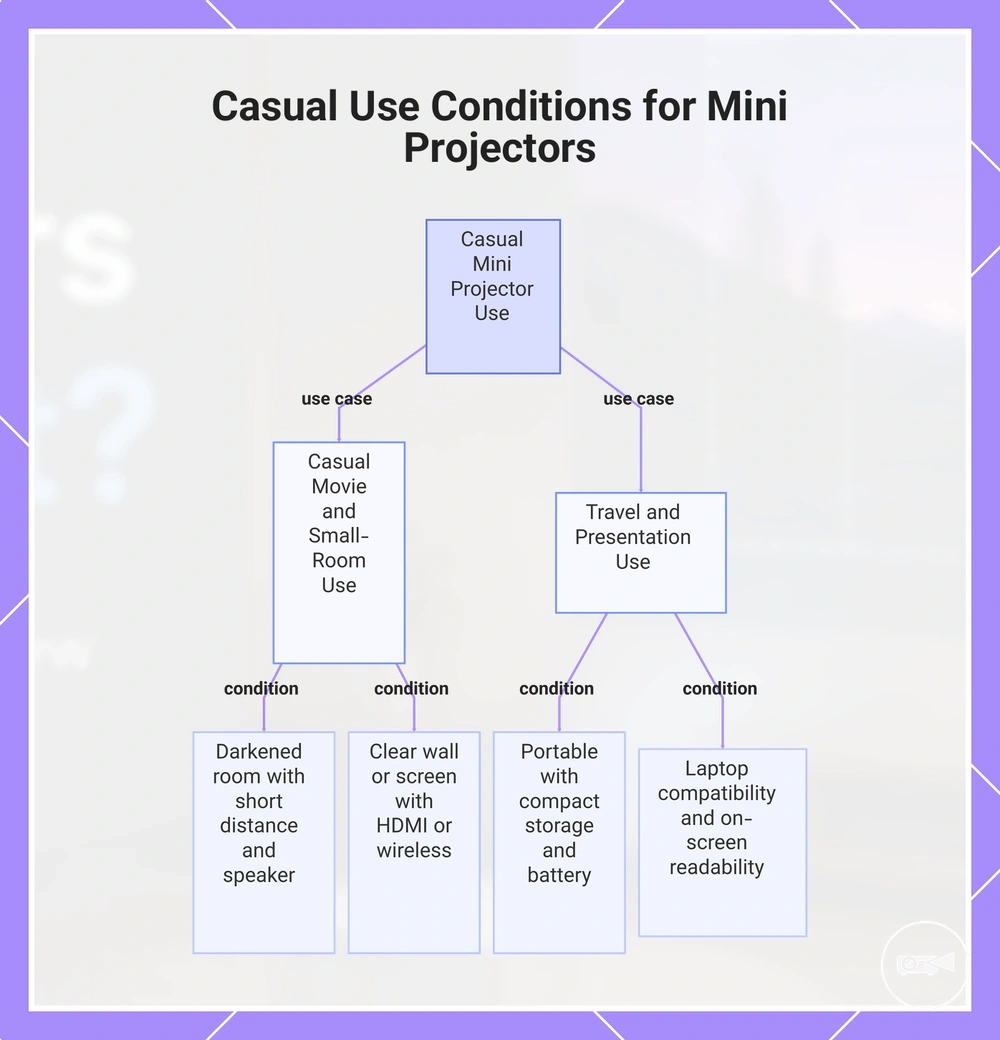
Casual movies and small-room use are a good fit when the room can be darkened, the viewing distance is short, and the built-in speaker provides enough sound for the audience. A clear wall or projection screen helps the image appear more consistent, while suitable connection needs, such as HDMI or supported wireless casting, allow easy playback from compatible devices. For example, a family movie night in a bedroom or spare room often benefits from this setup without requiring a permanent installation. Learn more about choosing a mini projector for movies.
If presentation quality becomes the primary requirement, see mini projector for presentations for more specific guidance.
Travel and presentation use remain practical when portability, compact storage, battery support where available, and connection needs suit the destination and device. For example, a traveller can share holiday photos in temporary accommodation, while a small meeting can display slides if laptop compatibility and on-screen readability are suitable for the audience size. If presentation quality becomes the primary requirement, see mini projector for presentations for more specific guidance.
This chart shows the two main casual use scenarios for mini projectors and the key conditions that make them suitable.
This chart shows the two main casual use scenarios for mini projectors and the key conditions that make them suitable.
Limitations That Reduce Mini Projector Value
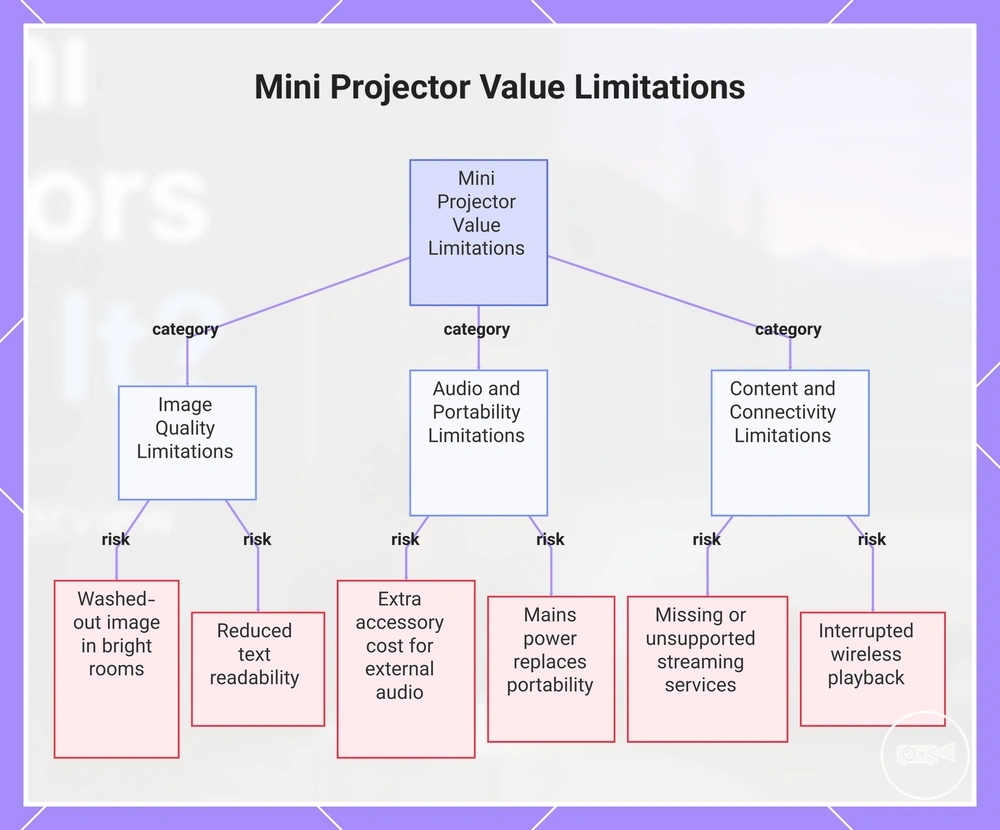
A mini projector can become poor value when its limitations reduce image quality, audio clarity, portability, or reliable access to content enough to require extra equipment. A low purchase price remains worthwhile only when those compromises match the intended use; otherwise, the limitations become value risks.
Sharpness becomes a purchase-regret risk when low native resolution or inconsistent focus reduces text readability and fine detail.
Brightness becomes a value-reducing limitation when room light or a larger screen size produces a washed-out image, while a darker room and smaller image make the trade-off more manageable. Sharpness becomes a purchase-regret risk when low native resolution or inconsistent focus reduces text readability and fine detail. Speaker strength is acceptable for close personal viewing when volume and clarity suit the room, but weak output creates extra accessory cost when external audio is needed. For example, a compact projector may remain suitable for a dark bedroom movie night yet feel poor value in a bright living room where both image visibility and sound coverage are inadequate.
These weaknesses remain manageable only when the required power source, apps, and connection method are confirmed before purchase.
Battery duration becomes a limitation when the available runtime is shorter than the intended viewing session, because mains power then replaces portable use. Heat becomes more significant during extended operation when rising operating temperature increases fan noise or limits comfortable placement. App support reduces value when required streaming services are absent or stop receiving compatible updates, while connection reliability becomes a deal-breaker when wireless playback or presentation use requires uninterrupted access. These weaknesses remain manageable only when the required power source, apps, and connection method are confirmed before purchase.
Limitations That Reduce Mini Projector Value are not equal in every use case.
Limitations That Reduce Mini Projector Value are not equal in every use case. This checklist separates manageable trade-offs from conditions that are more likely to become deal-breakers.
- Brightness: Matters in rooms with uncontrolled light or at larger screen sizes, where a washed-out image causes direct value loss.
- Sharpness: Matters for subtitles, small text, and fine detail, where limited native resolution or uneven focus reduces clarity.
- Speaker strength: Matters in larger rooms or group viewing, where insufficient volume or clarity creates external-audio cost.
- Battery duration: Matters when viewing sessions exceed the available runtime, where reliance on mains power reduces portability.
- Heat: Matters during longer sessions or in confined placement, where increased temperature and fan noise reduce comfort.
- App support: Matters when required streaming services are unavailable or unsupported, where an external streaming device adds cost.
- Connection reliability: Matters for wireless streaming or presentations, where interrupted playback or unstable device pairing reduces practical value.
This chart groups the main limitations that can reduce a mini projector's value and shows the specific risks associated with each category.
Brightness, sharpness, and room-light limits
Brightness, sharpness, and room light determine whether a mini projector delivers clear image quality or feels like poor value in everyday viewing. Image quality remains strongest when ambient light is controlled and the screen size suits the projector, while brighter surroundings or oversized screens increase the risk of a washed-out image.
As screen size increases, the available light spreads across a larger surface, reducing perceived brightness, contrast, and picture clarity.
Brightness influences how well the picture remains visible against ambient light, and contrast is preserved more effectively in a dark room than in a brighter one. Sharpness depends on native resolution together with accurate focus, allowing finer detail and clearer text when both are sufficient for the selected screen size. As screen size increases, the available light spreads across a larger surface, reducing perceived brightness, contrast, and picture clarity. For example, a mini projector that appears sharp on a smaller screen in a dim room can look softer and less vibrant when projected onto a much larger screen with room light present.
The table below highlights how room light and screen size influence perceived value without assuming identical performance across all models.
The relationship between viewing conditions and image quality is easier to compare by matching the environment with the expected image effect. The table below highlights how room light and screen size influence perceived value without assuming identical performance across all models.
| Condition | Image effect | Value implication |
|---|---|---|
| Dark room | Higher contrast with a clearer image | Makes available brightness more effective and improves perceived value. |
| Dim room | Balanced image quality with moderate contrast | Represents a practical trade-off for everyday viewing. |
| Brighter room | Greater risk of a washed-out image because ambient light reduces visible contrast | Perceived value falls if image clarity no longer meets viewing needs. |
| Smaller screen | Higher perceived brightness and sharper image | Often provides better image quality from the available light output. |
| Larger screen | Lower perceived brightness, contrast, and detail | Can reduce value when picture clarity no longer matches expectations. |
Battery, speaker, and streaming compatibility trade-offs
Battery, speaker, and streaming compatibility can change a mini projector's real value after the initial purchase. Convenience improves when these features match the intended use, while missing capabilities increase ownership cost through extra cables, adapters, audio equipment, or power accessories. Hidden accessory needs therefore affect whether the projector remains good value.
Hidden accessory needs therefore affect whether the projector remains good value.
A rechargeable battery improves portability when its stated runtime covers the intended viewing session, while a power adapter is required when battery capacity is insufficient or mains-powered use is planned. Reviewing battery life and power use helps determine whether portable operation or regular access to mains power better fits the intended use. A built-in speaker may suit personal viewing in a smaller room, but limited volume or clarity can make external audio necessary in larger spaces, adding equipment and ownership cost. For example, a travel setup may remain practical with the built-in speaker, while a shared movie setup may require separate audio output.
Verify the following features because unsupported connections or missing accessories can increase cost beyond the projector price.
Streaming compatibility affects convenience because support for streaming apps, wireless casting, HDMI, and adapters must match the specific projector model and playback device. Verify the following features because unsupported connections or missing accessories can increase cost beyond the projector price.
- Battery runtime: Confirm that the model's stated rechargeable battery runtime covers the intended viewing session.
- Power access: Check whether the supplied power adapter is required for regular use or longer sessions.
- Speaker adequacy: Decide whether the built-in speaker provides enough volume for the intended room size or whether external audio is needed.
- App support: Verify that the specific model supports the required streaming apps rather than assuming built-in access.
- HDMI and adapters: Confirm that the playback device and projector use matching HDMI connections or identify the required adapters.
- Wireless casting: Check whether the projector supports the playback device's casting method and whether any app, network, or operating-system limitation applies.
Mini Projector Cost Versus Performance Expectations
A mini projector offers good value when its cost matches realistic performance expectations for the intended room, screen size, and viewing frequency. A lower price level usually requires greater compromise, while spending more can improve convenience, image quality, and reliability without guaranteeing a better value outcome. Cost should therefore be judged against the experience the projector is expected to deliver.
Cost should therefore be judged against the experience the projector is expected to deliver.
A budget tier is most suitable when basic portability and occasional dark-room viewing matter more than strong brightness, refined audio, or dependable battery use. A mid-range mini projector usually offers a more balanced combination of usable brightness, clearer image quality, broader connectivity, and stronger reliability for regular use. A premium portable model may add better battery integration, stronger audio, smart features, and more consistent performance, but the higher cost mainly benefits users who will use those features frequently. For example, paying more for an integrated battery adds little value when the projector will remain beside a power outlet.
The table compares likely strengths and compromises without treating any tier as universally better.
Spending more improves the experience when the next cost tier resolves a specific limitation, such as weak brightness, insufficient audio, unreliable connectivity, or the absence of a usable battery. Diminishing returns begin when the added cost pays for features that do not change the intended viewing conditions or usage pattern. The table compares likely strengths and compromises without treating any tier as universally better.
| Cost tier | Likely strengths | Likely compromises | Best-fit expectation |
|---|---|---|---|
| Budget | Low initial cost, compact size, and basic playback for controlled viewing conditions | Lower brightness, basic audio, limited battery capability, and less consistent image quality or reliability | Occasional use in a dark room where portability matters more than polished performance |
| Mid-range | More usable brightness, clearer image quality, improved connectivity, and a better balance of audio and reliability | Battery, speaker, or smart features may still require model-specific compromises | Regular viewing where balanced performance and convenience justify spending more |
| Premium portable | Stronger integrated audio, more capable battery systems, smart features, and more consistent portable performance | Higher cost and diminishing returns when premium features are unnecessary for the intended setup | Frequent portable use where integrated features replace separate accessories and improve convenience |
Low-budget models and acceptable compromises
Low-budget models offer acceptable value when their compromises match casual use in controlled conditions. Lower brightness, basic speakers, simpler optics, limited battery capacity, and possible adapter needs are reasonable trade-offs when the projector is used occasionally in a dark room and polished performance is not required. An acceptable compromise reduces convenience or quality without preventing the intended use.
The following split keeps each trade-off tied to a practical use condition.
A budget mini projector becomes a poor-value risk when its limitations conflict with the planned setup. Lower brightness is risky in rooms with uncontrolled ambient light, while basic speakers are unsuitable when the required volume exceeds personal or small-room listening. For example, a limited battery is acceptable beside a power outlet but risky when portable use must continue beyond the model's stated runtime. The following split keeps each trade-off tied to a practical use condition.
- Acceptable compromise: Lower brightness for casual use in a dark room with a modest image size.
- Acceptable compromise: Basic speakers when personal listening is sufficient or external audio is already available.
- Acceptable compromise: Simpler optics when minor edge softness or limited adjustment does not obstruct casual viewing.
- Risky compromise: Limited battery when portable use requires more runtime than the model states and a power adapter is unavailable.
- Risky compromise: Adapter needs when the required connection is unsupported and extra hardware removes the expected cost or convenience advantage.
- Risky compromise: Lower brightness or basic audio for bright rooms, outdoor viewing, group presentations, demanding gaming, or other high-performance use.
Mid-range models and stronger value signals
Mid-range models offer stronger value when their upgraded attributes improve the intended viewing experience rather than merely adding feature labels. The most useful value signals are native resolution, realistic brightness, usable speakers, stable connectivity, flexible power options, portability, and warranty signals. These useful upgrades should address a practical need rather than add marketing appeal alone.
Use the following checklist to separate useful upgrades from marketing noise.
A native resolution that matches the intended content can improve image clarity, while realistic brightness should suit the planned viewing environment instead of relying on promotional claims. Usable speakers, stable connectivity, and appropriate power options improve convenience when they reduce the need for extra accessories or repeated setup. Portability adds value when the projector is easy to move for its intended use, and warranty signals with clearly stated coverage can improve ownership confidence. Use the following checklist to separate useful upgrades from marketing noise.
- Native resolution: Confirm the native resolution because it determines the image detail that is actually displayed.
- Realistic brightness: Prefer brightness claims that match the intended room conditions rather than headline specifications alone.
- Usable speakers: Check whether the built-in speakers suit the expected room size or whether external audio is practical.
- Stable connectivity: Verify that the required wired or wireless connections support everyday use without unnecessary adapters.
- Power options: Match mains power or battery capability to the intended viewing environment.
- Portability and warranty signals: Look for manageable size and weight together with clearly stated warranty coverage and support terms, as these indicators can strengthen long-term value.
Premium portable models and diminishing returns
Premium portable models justify a higher price only when their added convenience matches the intended use. Improvements in brightness, optics, sound, battery performance, smart features, and build quality can add practical value, but the value ceiling is reached when extra cost no longer produces a meaningful benefit. At that point, the premium tier delivers diminishing returns.
At that point, the premium tier delivers diminishing returns.
A higher-priced portable projector can be a better fit when portability is essential and its added features replace separate equipment or reduce setup effort. Greater brightness and better optics can improve image quality under the conditions they are designed for, while stronger sound, longer battery operation, and integrated smart features can improve convenience during travel or temporary setups. Build quality adds more value when the projector is moved frequently than when it remains in one location. For example, a user who regularly carries the projector between rooms may benefit from integrated streaming, battery power, and a more durable enclosure, whereas a fixed-room user may obtain similar practical value from less expensive alternatives.
Build quality adds more value when the projector is moved frequently than when it remains in one location.
The comparison below shows when each premium feature is likely to justify its cost and when diminishing returns become more likely.
| Premium feature | Value condition |
|---|---|
| Brightness | Adds value when the projector is used in brighter rooms; it offers less benefit when viewing is limited to controlled dark conditions. |
| Optics | Adds value when improved focus, image uniformity, or setup flexibility is visible during normal use; the return is lower when those differences are not noticeable at the intended image size. |
| Sound | Adds convenience when built-in audio replaces external speakers; it delivers less value when separate audio equipment is already available. |
| Battery | Adds value for cable-free or temporary viewing; it is less useful when mains power is always available. |
| Smart features | Add convenience when integrated apps or wireless functions remove the need for a separate media device; alternatives may offer better value when an external streaming device is already used. |
| Build quality | Adds value when frequent transport makes durability and reliability important; it offers diminishing returns when the projector remains in a fixed location. |
Mini Projectors Compared With Practical Alternatives
Mini projectors prioritise portability and screen size flexibility, while practical alternatives usually provide greater brightness or more consistent everyday viewing. Their value changes with the room, viewing frequency, setup effort, and need to move the display. These use-case differences form the comparison frame.
These use-case differences form the comparison frame.
Full-size projectors are the stronger alternative when higher brightness, steadier optics, and more consistent image quality matter more than compact transport. TVs provide more consistent images in ambient light and require less setup effort, making them suitable for frequent everyday viewing at a fixed screen size. Mini projectors remain useful when portability and a flexible screen are more important than maximum brightness or image consistency. For example, a portable unit suits occasional viewing in different rooms, while a TV better fits daily viewing in one permanent location.
Mini projectors remain useful when portability and a flexible screen are more important than maximum brightness or image consistency.
The table keeps these practical alternatives subordinate to the mini-projector value decision rather than turning them into separate buying guides. A deeper mini projector vs standard projector comparison can examine projector-specific differences in more detail, while this section only establishes the high-level trade-off and long-term value context.
| Option | Main strength | Main trade-off | Best-fit use case |
|---|---|---|---|
| Mini projector | High portability and flexible screen size with relatively low setup effort for temporary viewing. | Lower brightness and less image consistency than larger projectors or TVs, especially in rooms with ambient light. | Occasional viewing, travel, small spaces, or rooms where the display must be packed away after use. |
| Full-size projector | Higher brightness and more consistent image quality for larger projected images. | Lower portability, greater setup effort, and a stronger need for suitable placement and room control. | Dedicated or semi-permanent viewing spaces where screen size and projected image quality take priority. |
| TV | Consistent brightness and image quality for everyday viewing with minimal setup. | Fixed screen size and limited portability compared with either projector type. | Frequent viewing in a permanent location, particularly where ambient light and ease of use affect long-term value. |
Full-size projectors for brightness and image quality
A full-size projector offers better value when higher brightness and more consistent image quality matter more than portability. Its larger optics and performance-focused design suit bigger projected images and fixed rooms where a compact mini projector provides less visual impact. Performance is the main reason to consider full-size projectors.
Performance is the main reason to consider full-size projectors.
The trade-off is that larger optics, cooling systems, audio hardware, and casing increase size and reduce portability. A full-size projector also requires a more deliberate throw setup because placement, screen distance, and room size determine the usable image position and scale. For example, a fixed living-room setup can justify the extra setup effort when brightness and image quality are priorities, while frequent movement between rooms favours a smaller projector. The full-size option therefore fits a fixed, performance-focused use case rather than one centred on portability.
TVs for everyday viewing consistency
A TV provides better everyday value when reliable viewing in ambient light, built-in audio, and immediate daily use matter more than portability. Its fixed screen delivers a stable image without repeated positioning or focus adjustments, while a mini projector offers greater placement flexibility. Consistency is the main TV advantage.
Its integrated audio supports routine viewing without separate speakers, although audio quality remains model-specific.
For everyday viewing, a TV suits regular streaming in a fixed room because its ambient-light performance and ease of daily use reduce setup effort. Its integrated audio supports routine viewing without separate speakers, although audio quality remains model-specific. For example, a television suits a living room used every evening, while a mini projector better supports portable viewing across different rooms. The trade-off is a permanent space requirement and reduced flexibility because the fixed screen cannot be packed away or resized like a projected image.
When a Mini Projector Is Worth Buying
A mini projector is worth buying when portability and casual flexible viewing matter more than maximum brightness or daily-screen consistency. Its strongest buying fit is occasional viewing in controllable room light where easy movement and compact storage have more value than fixed-screen performance.
Low room light supports a clearer image, while strong ambient light reduces visible contrast.
The use case should suit occasional films, travel, presentations, or room-to-room viewing rather than replacing a consistently bright daily screen. Low room light supports a clearer image, while strong ambient light reduces visible contrast. A moderate screen size is the safer image expectation because increasing the projected area reduces perceived brightness.
Portability provides the most value when the projector must move between locations or fit into limited storage.
Portability provides the most value when the projector must move between locations or fit into limited storage. Set the audio expectation at convenient built-in sound rather than room-filling performance, and treat a battery need as essential only when mains power is unavailable. Connection fit requires support for the intended source through a compatible video input, streaming method, wireless connection, or adapter.
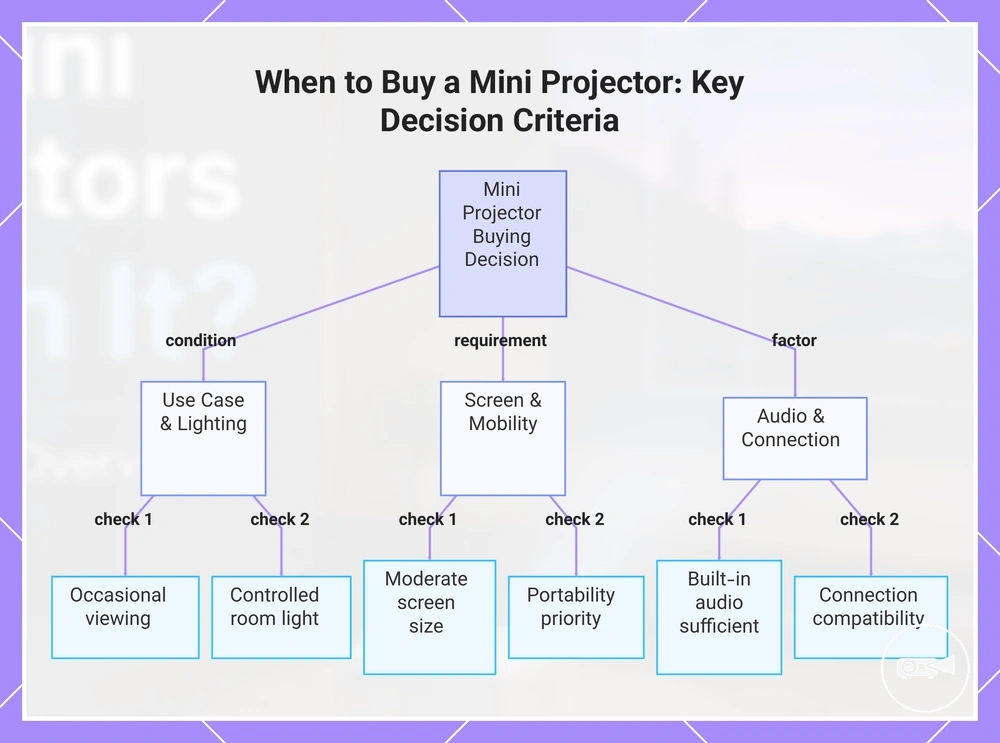
Use the checklist below to turn the main value criteria into a clear buy-or-skip decision.
Use the checklist below to turn the main value criteria into a clear buy-or-skip decision. A mini projector is a suitable choice when most conditions match the intended use and the remaining compromises stay within the buyer's price tolerance.
- Use case: Buy for occasional entertainment, travel, presentations, or flexible placement; skip it as a direct substitute for a consistently bright daily screen.
- Room light: Buy when viewing can occur in dim or controlled light; skip it when the room must remain brightly lit.
- Screen size: Buy when a moderate projected image meets the image expectation; skip it when a very large image must remain bright and detailed.
- Portability: Buy when compact storage and movement between locations are priorities; skip it when the projector will remain permanently installed.
- Audio expectation: Buy when built-in audio is sufficient for casual viewing; plan separate speakers when stronger or clearer sound is required.
- Battery need: Buy a battery-equipped model when viewing away from mains power is part of the use case; otherwise, mains-only operation can meet the requirement.
- Connection fit: Buy only when the projector supports the intended device, input, adapter, or streaming method.
- Price tolerance: Buy when the cost matches the expected brightness, convenience, and portability rather than an expectation of full-size-projector performance.
Budget expectations suit basic viewing in controlled light, mid-range expectations suit buyers seeking a better balance of convenience and image performance, and premium portable expectations prioritise compact design, easier setup, and stronger mobility. The right decision is the tier whose image, audio, battery, connection, and portability trade-offs remain acceptable for the intended use.
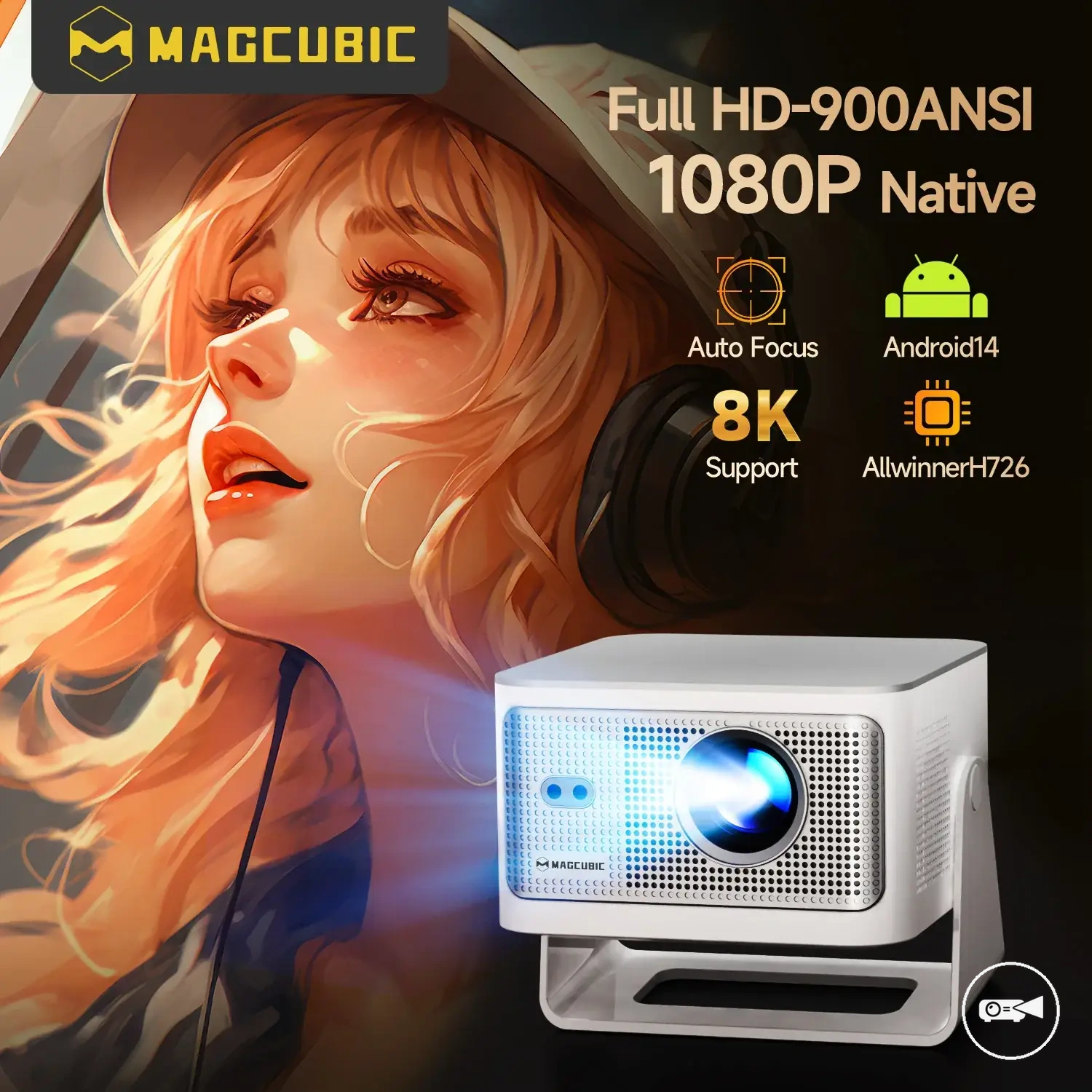
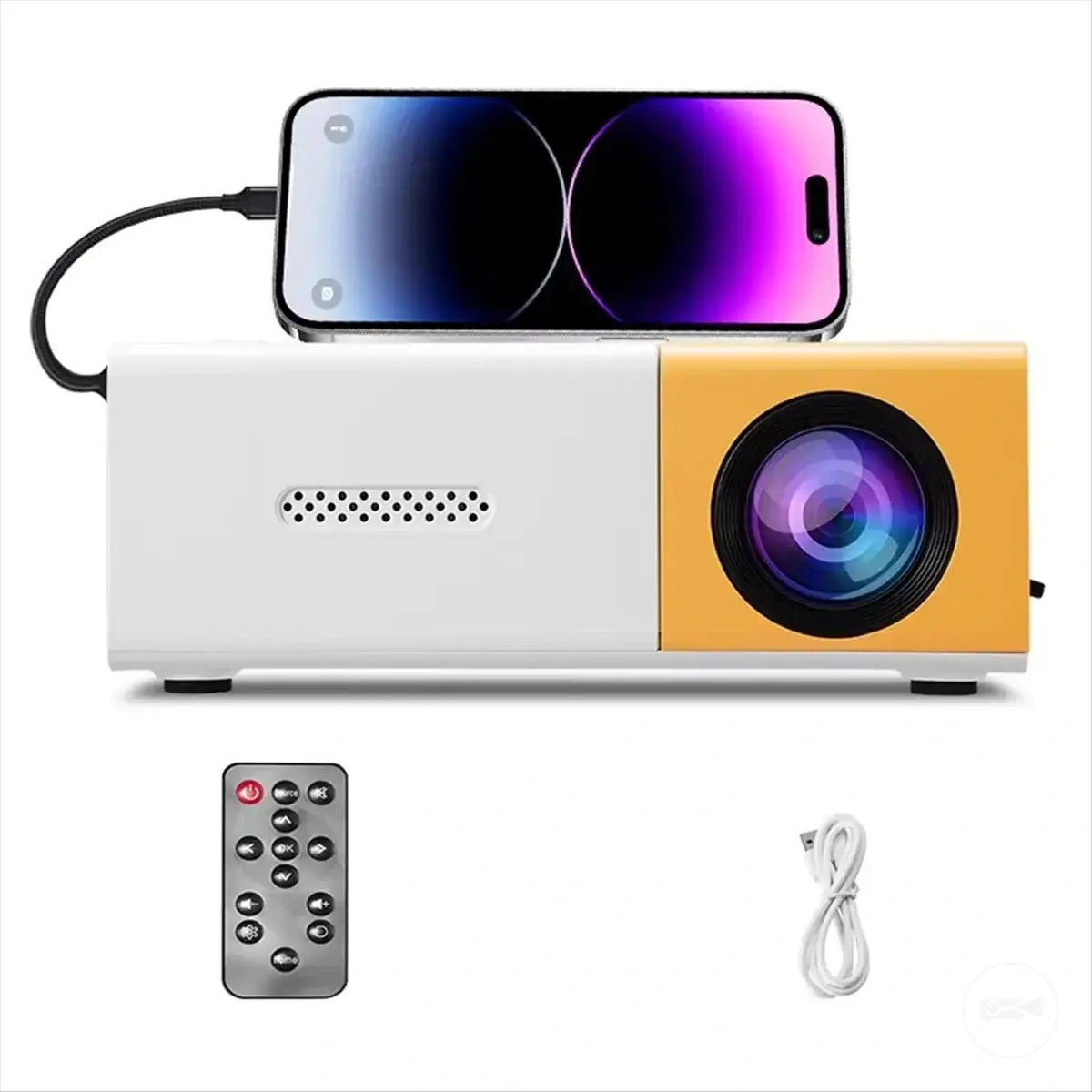
Here are product examples that may make comparison easier.
Here are product examples that may make comparison easier. Before buying, always review the compatibility criteria, essential features, and product details.
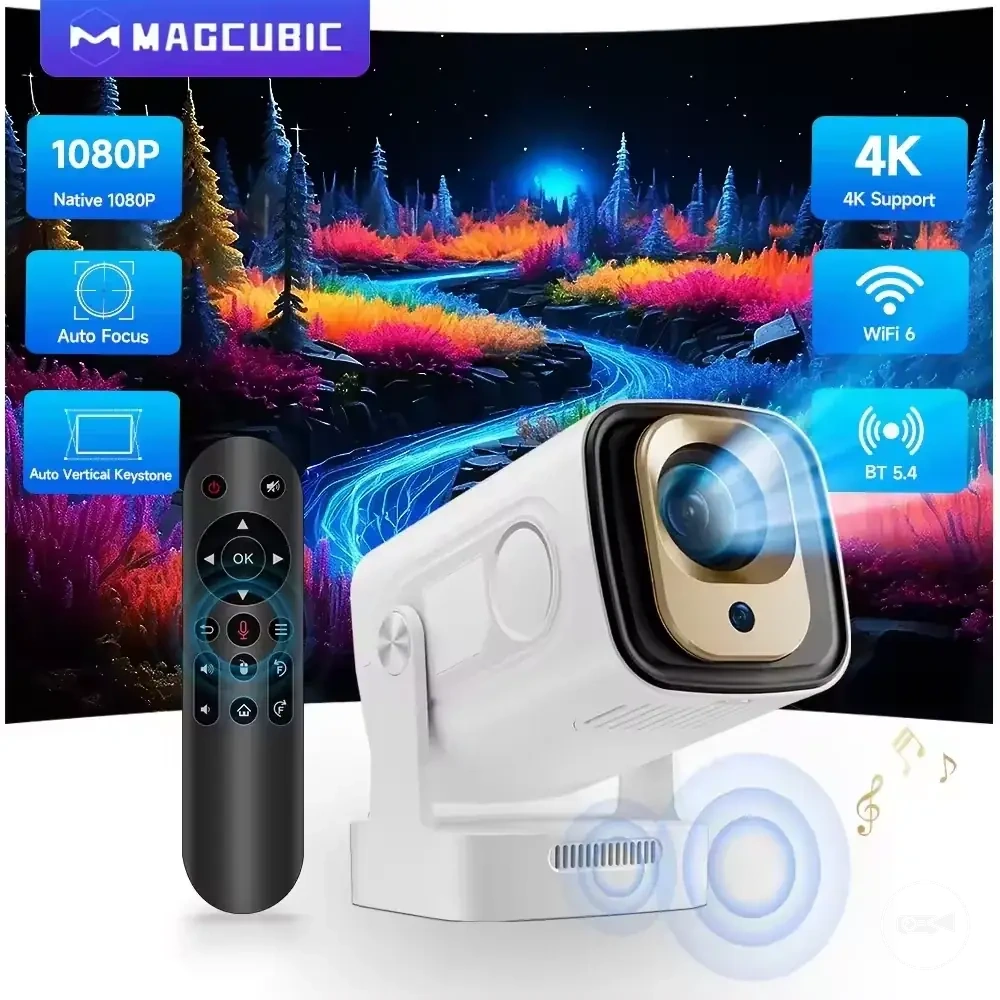
This chart shows the main conditions and trade-offs to consider when deciding whether a mini projector is worth buying.
When a Mini Projector Is Not the Best Choice
A mini projector is not the best choice when bright-room performance, daily reliability, large sharp images, or minimal setup friction are essential. The mismatch is strongest for high ambient light, demanding fixed living-room use, strong audio needs, and connection requirements with little adapter tolerance.
Each condition identifies a user need that portable design may not satisfy consistently.
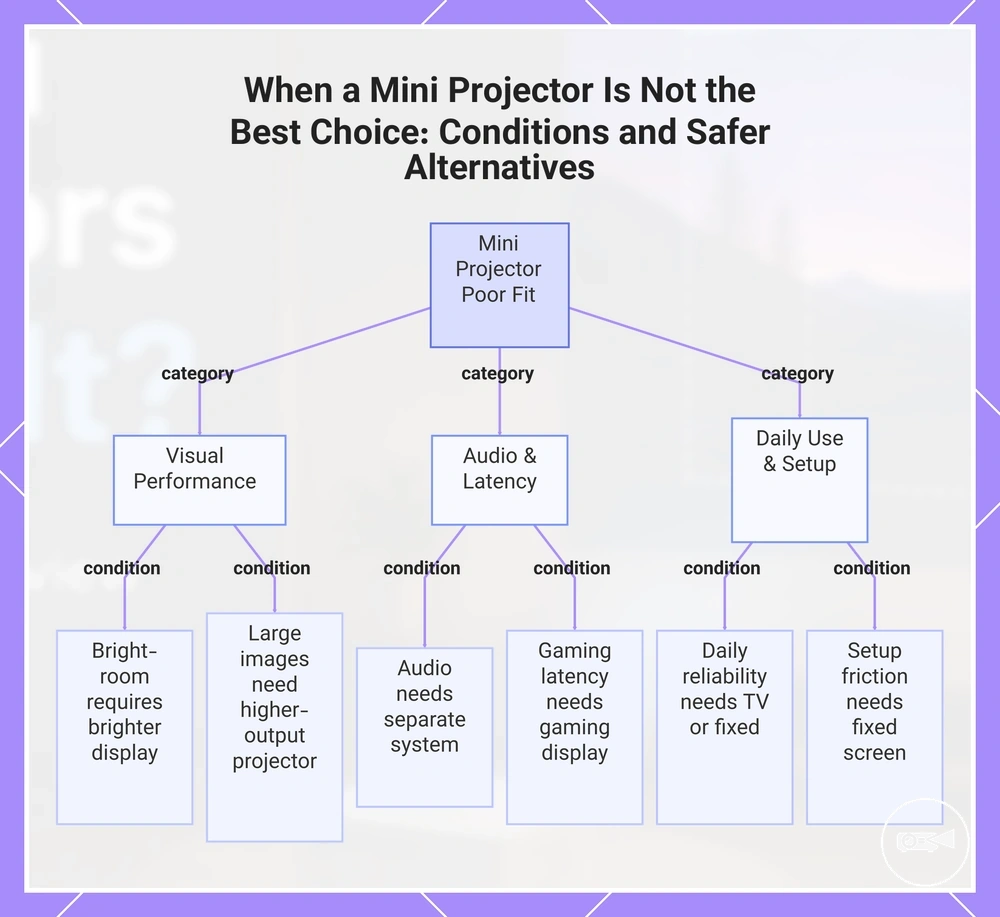
Use the following conditions as a decision-safety check rather than as proof that every mini projector offers lower value. Each condition identifies a user need that portable design may not satisfy consistently. A safer alternative direction is included without turning the section into a replacement guide.
- Bright-room performance: High ambient light can reduce visible contrast and create a washed-out image, so a brighter fixed display is the safer direction for regular daytime viewing.
- Large sharp images: A larger screen size spreads the available light across more area and can weaken brightness and perceived detail, so a higher-output projector is the safer direction for a large, consistently sharp image.
- Strong audio needs: Compact built-in speakers may not meet room-filling or detailed listening expectations, so a separate audio system or a display with stronger integrated sound is the safer direction.
- Gaming latency sensitivity: A mini projector may be a poor fit when fast response is essential because input delay and refresh support differ by model, so a gaming-focused display with verified latency specifications is the safer direction.
- Daily reliability: Fixed living-room use places more value on immediate start-up, stable placement, and consistent viewing than on portability, so a TV or fixed projector installation is the safer direction.
- Minimal setup friction: Projection distance, focus, alignment, room light, and audio can require repeated adjustment, so a fixed screen is the safer direction when daily use must involve little preparation.
- No adapter tolerance: A connection mismatch occurs when the projector lacks the required input, wireless method, or streaming support, so a display with the needed connection built in is the safer direction.
A poor fit does not mean the mini projector is malfunctioning or incorrectly configured. If it operates within its stated brightness, connection, and setup conditions but still misses the user's room, image, audio, latency, or convenience expectations, the lower value outcome comes from selection mismatch rather than product failure.
A poor fit does not mean the mini projector is malfunctioning or incorrectly configured.
This chart identifies the key conditions where a mini projector is a poor fit and the recommended safer alternative for each condition.
Long-Term Value, Lifespan, and Replacement Expectations
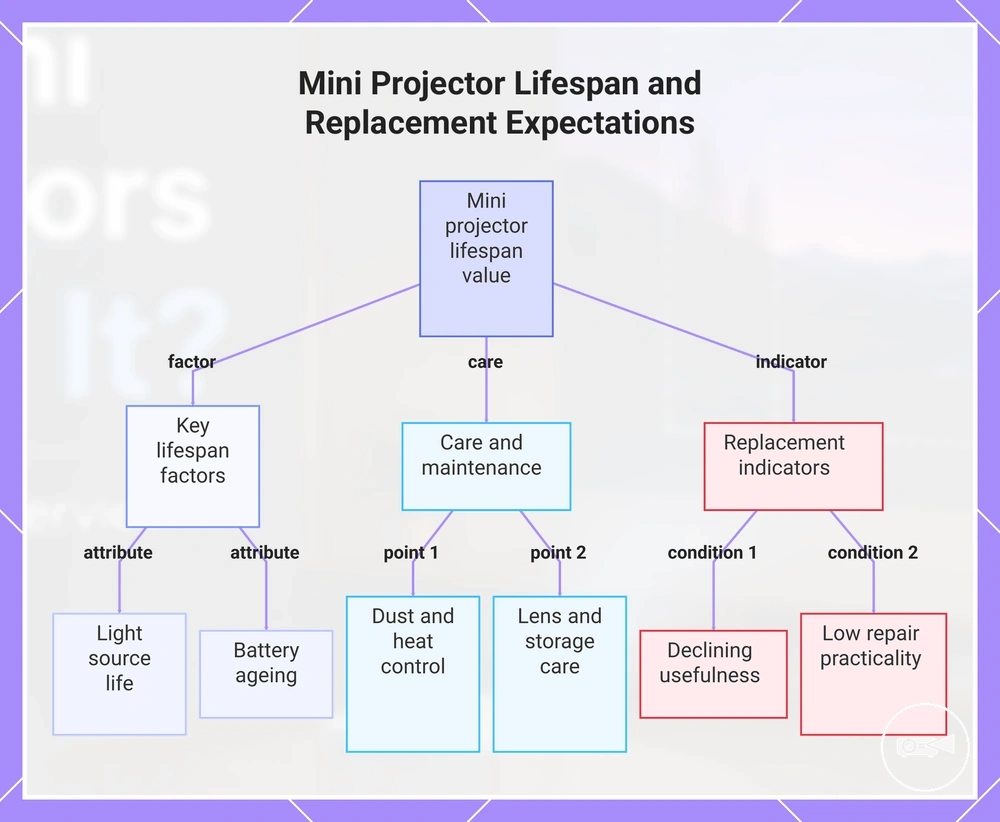
A mini projector delivers stronger long-term value when its lifespan remains aligned with the owner’s replacement expectations and intended use. Ownership duration is more likely to extend when care needs are manageable and usage frequency remains within the conditions the model is designed to handle.
Dust can restrict airflow or reduce image clarity, and sustained heat can increase stress on internal components.
Light source life is model-specific, while battery ageing becomes more important for users who depend on rechargeable portable use. Dust can restrict airflow or reduce image clarity, and sustained heat can increase stress on internal components. Lens care protects image quality, while dry, protected storage limits exposure to moisture, impact, and contamination. Repair practicality also affects replacement timing because limited access to parts, battery replacement, or servicing can make continued ownership less economical.
Replacement expectations should be based on declining usefulness rather than a fixed ownership period.
Replacement expectations should be based on declining usefulness rather than a fixed ownership period. A projector may remain suitable while brightness, battery runtime, image quality, and connections still meet the intended use, but earlier replacement becomes reasonable when those functions no longer satisfy the owner’s needs and repair practicality is low. For deeper maintenance and ownership-duration guidance, review the mini projector lifespan information.
For deeper maintenance and ownership-duration guidance, review the mini projector lifespan information.
For example, an occasional user may retain acceptable performance for longer because operating hours and battery cycles remain lower, while a frequent user places greater demand on cooling and the light source. A user who relies on rechargeable use should monitor battery runtime more closely because battery ageing can affect portable usefulness before the rest of the projector becomes unsuitable. Use this ownership checklist to identify conditions that support longer value or indicate earlier replacement.
- Light source: Check whether brightness and image consistency still meet the intended screen size and room conditions.
- Battery ageing: Compare current rechargeable runtime with the duration required for normal portable use.
- Dust: Keep ventilation openings unobstructed and treat visible contamination or restricted airflow as a maintenance concern.
- Heat: Maintain clear airflow during use and avoid storage conditions that expose the projector to sustained high temperatures.
- Lens care: Protect the lens from scratches, fingerprints, and abrasive cleaning materials.
- Storage: Store the projector in a dry, protected location where moisture, impact, and dust exposure remain limited.
- Usage frequency: Expect frequent operation and repeated rechargeable use to create earlier maintenance or replacement pressure than occasional use.
This chart shows the key factors that influence a mini projector's long-term value, the care actions that extend its lifespan, and the indicators that suggest replacement is needed.